
What's Happening?
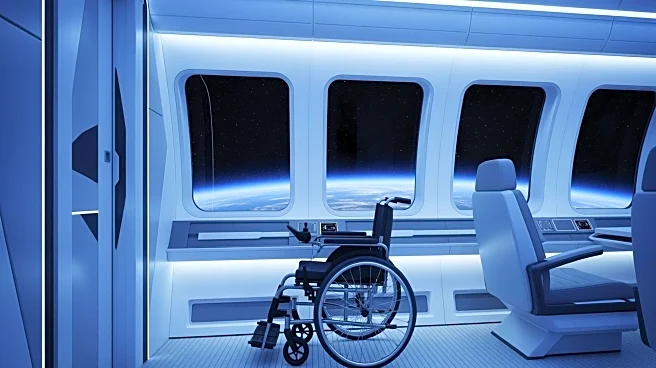
Michaela Benthaus, a German aerospace and mechatronics engineer, has made history as the first wheelchair user to travel to space. She participated in a Blue Origin suborbital flight, launched from Texas,
which crossed the Karman line, the recognized boundary of space. Benthaus, who uses a wheelchair following a spinal cord injury, highlighted the importance of inclusivity in all aspects of society, including space exploration. The flight was part of Blue Origin's ongoing space tourism efforts, marking its 16th crewed mission. The mission underscores the company's commitment to making space accessible to a broader range of individuals.
Why It's Important?
Benthaus's journey represents a significant step towards inclusivity in space travel, challenging the traditional barriers faced by individuals with disabilities. Her participation in the flight not only inspires millions but also emphasizes the need for accessibility in all areas of life, including the burgeoning field of space tourism. This milestone could influence future policies and designs in space travel, encouraging other companies to consider accessibility in their missions. It also highlights the role of private companies like Blue Origin in democratizing space travel, potentially setting a precedent for other space tourism ventures.
What's Next?
Following this historic flight, there may be increased advocacy for more inclusive space travel opportunities. Blue Origin and other private space companies might explore further innovations to accommodate diverse passengers. This could lead to collaborations with organizations focused on disability rights to ensure that future space missions are accessible to all. Additionally, the success of this mission may prompt discussions within the space industry about the importance of inclusivity and the potential for new markets in space tourism.