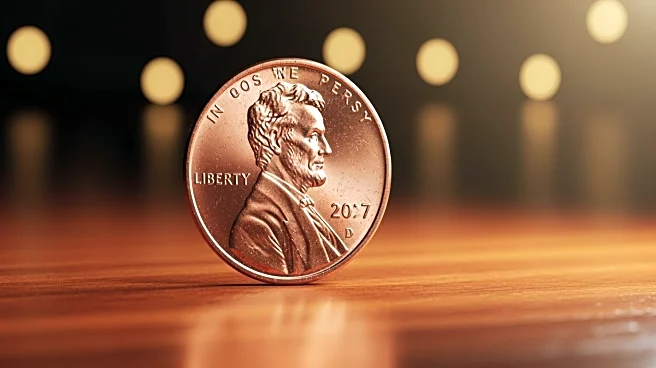




What's Happening?
The last pennies ever minted by the U.S. Mint were sold at auction for a total of $16.76 million. The auction, conducted by Stack's Bowers Galleries, featured 232 sets of three coins, each including a 2025 penny from the Philadelphia Mint, a 2025-D penny from the Denver
Mint, and a special 24-karat gold penny. This auction followed President Trump's directive to halt the production of one-cent coins as a cost-cutting measure. The highest bid was $800,000 for the last set of pennies, setting a new record for modern U.S. currency sold at auction. The decision to cease penny production marks the end of an era for the U.S. Mint, which had been producing pennies for 232 years.
Why It's Important?
The auction of the final U.S. pennies signifies a significant shift in U.S. currency production and reflects broader economic considerations. The decision to halt penny production is part of a cost-saving initiative, highlighting the government's efforts to streamline operations and reduce expenses. This move may influence future decisions regarding the production of other low-denomination coins. For collectors and numismatists, the auction represents a unique opportunity to own a piece of American history, while for the general public, it marks the gradual disappearance of pennies from everyday transactions. The event underscores the evolving nature of currency in response to economic and technological changes.
What's Next?
With the cessation of penny production, existing pennies will continue to circulate until they are gradually phased out. This transition may prompt discussions about the future of other coins and the potential for further currency modernization. Collectors may see increased interest in acquiring remaining pennies, potentially driving up their value. The U.S. Mint and Treasury Department may explore additional cost-saving measures and innovations in currency production, reflecting ongoing efforts to adapt to changing economic conditions.