




What's Happening?
Colorado's Division of Fire Prevention and Control, alongside the Insurance Institute for Business & Home Safety, conducted a demonstration at the West Metro Fire Rescue Training Center in Lakewood. The event showcased the stark difference in fire resistance
between a home built with standard materials and one designed with wildfire-conscious construction. While the conventionally built home was quickly engulfed in flames, the wildfire-mitigated structure remained largely untouched. Mike Morgan, director of Colorado's Division of Fire Prevention and Control, emphasized that the fire problem has shifted from a natural resource issue to a public safety crisis, necessitating stronger, more resilient communities. The demonstration highlighted the importance of a 'system of actions' for wildfire protection, including specific materials for roofs, vents, siding, and maintaining a five-foot clear zone around homes.
Why It's Important?
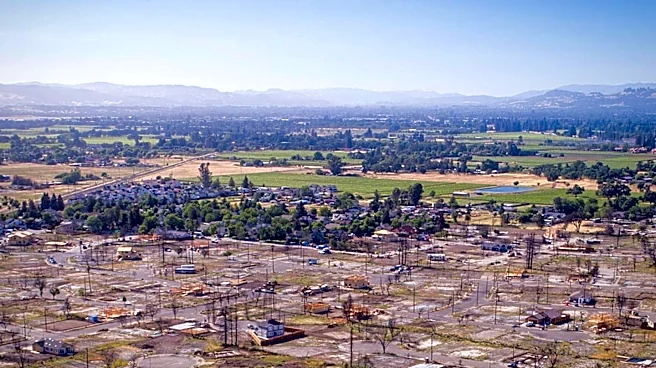
The increasing intensity of wildfires across the U.S., particularly in states like Colorado, poses significant threats to communities and infrastructure. This demonstration underscores the critical need for homeowners and builders to adopt wildfire-conscious construction practices. The Insurance Institute for Business & Home Safety, funded by the property insurance industry, plays a vital role in researching and promoting these standards, which can lead to more insurable and survivable homes. The shift in perspective from a natural resource problem to a public safety crisis indicates a broader recognition of the direct impact on human lives and property. Implementing these measures can reduce property damage, lower insurance risks, and enhance the safety of residents in wildfire-prone areas, ultimately mitigating the economic and social costs associated with large-scale fire events.
What's Next?
Following the demonstration, there is an expectation for increased adoption of wildfire-conscious building materials and practices among Colorado homeowners and builders. New builds in the state are already required to comply with a minimum fire building code enacted in July, and some communities, like Lyons, are considering additional regulations. While towns and cities may offer rebates for home retrofits, the cost of swapping out existing components can be substantial. The focus will be on balancing safety with affordability, encouraging homeowners to take protective measures tailored to their specific circumstances. The ongoing research by the Insurance Institute for Business & Home Safety will continue to inform best practices, with initiatives like the 143-unit Mountain Village subdivision in Jefferson County aiming to become Colorado's first fully wildfire-prepared neighborhood.
Beyond the Headlines
The demonstration highlights a deeper societal challenge: adapting to the evolving nature of environmental threats. The concept of 'team sport' between homeowners and builders for wildfire preparedness points to a collective responsibility beyond individual property lines. The long-term implications include potential shifts in urban planning and zoning laws in wildfire-prone regions, prioritizing fire-resistant designs and landscaping. This also raises ethical considerations regarding equitable access to fire-resistant housing, as retrofitting costs can be prohibitive for some. The insurance industry's involvement through the Insurance Institute for Business & Home Safety suggests a growing integration of scientific research into risk assessment and policy development, potentially leading to new insurance models that incentivize resilient construction and community-wide preparedness.