




What's Happening?
The European Union has issued a statement expressing grave concern over the persistent and devastating humanitarian crisis in Gaza. The EU highlights that severe flooding and winter conditions are further deteriorating the living conditions of an already
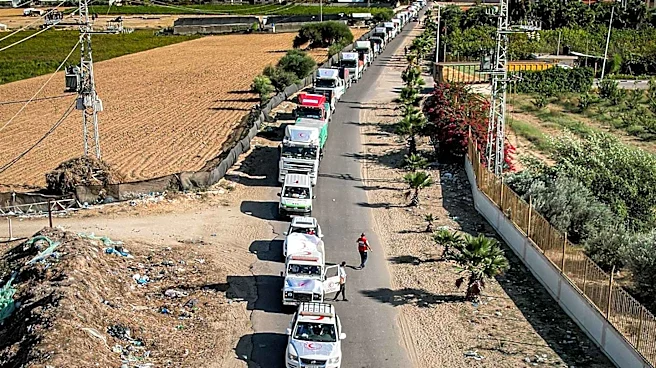
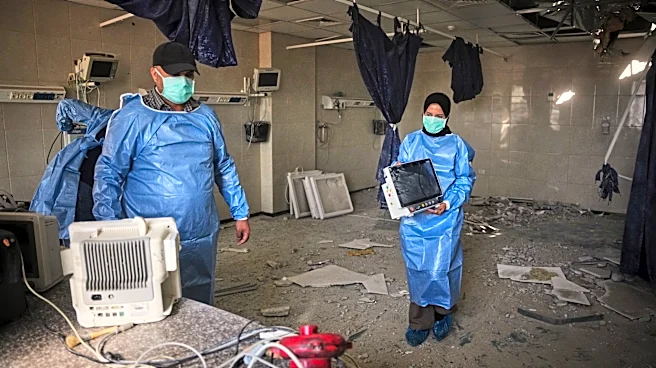
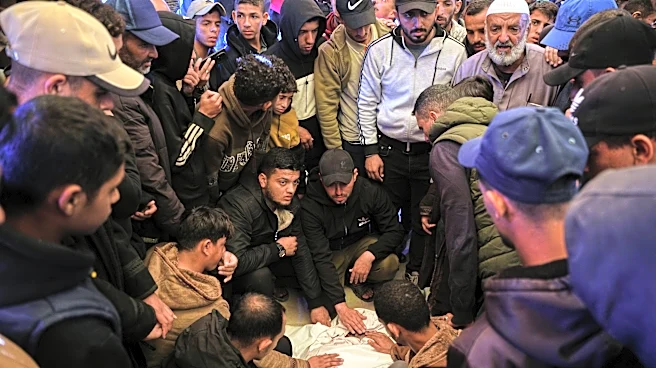
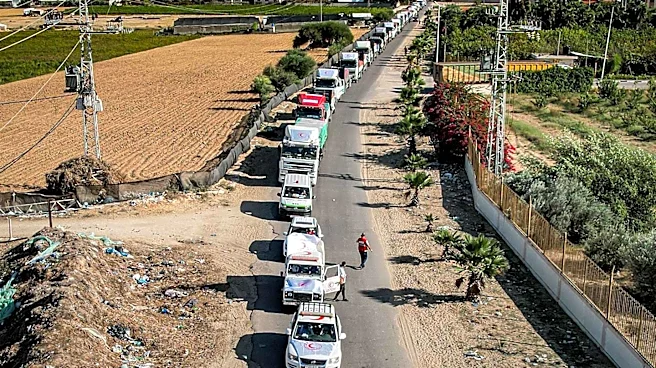
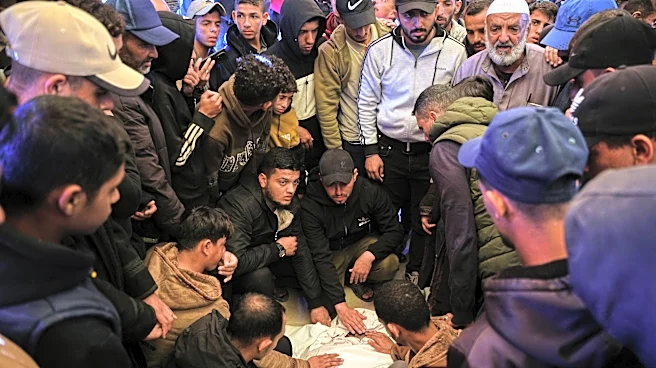
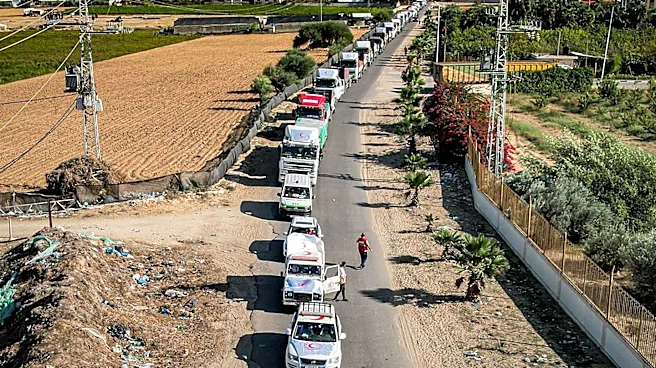
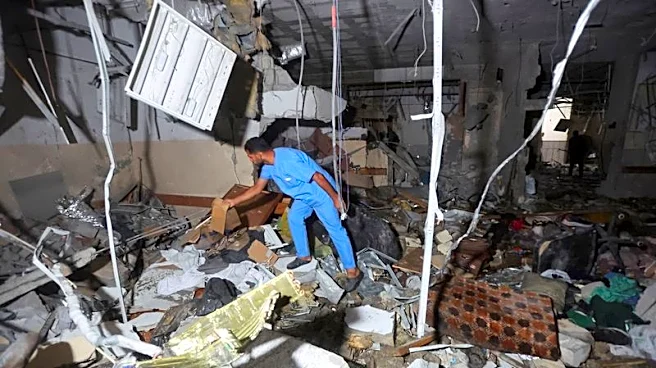
exhausted population, exacerbating unsafe conditions and human suffering. The statement urges Israel to allow immediate, unimpeded access and sustained distribution of humanitarian assistance and early recovery support at scale, and to reopen all Gaza border crossings. It also emphasizes Israel's obligation to enable the work of the UN and its agencies, as well as humanitarian organizations, and to comply with all international law, including international humanitarian law and international human rights law. The EU specifically noted the recent airstrike on the Nasser Hospital as deeply alarming and reiterated that aid should be used solely for peaceful purposes and not diverted by armed groups.
Why It's Important?
This statement from the EU underscores the international community's growing alarm regarding the humanitarian situation in Gaza. The call for unrestricted access to aid and the reopening of border crossings is crucial for alleviating the suffering of civilians, who are facing severe shortages of essential items, suitable shelter, medicine, and medical equipment. The emphasis on adherence to international law, particularly concerning the protection of civilians, civilian infrastructure, and medical facilities, highlights the legal and ethical obligations of all parties involved. The EU's stance reflects a broader international consensus that humanitarian considerations must take precedence, and that the targeting of medical facilities is a serious violation of international humanitarian law. The continued military strikes and access restrictions are creating an unacceptable and undignified living environment for the population.
What's Next?
The EU's statement calls for the full implementation of commitments related to humanitarian aid as foreseen in the Comprehensive Plan to End the Gaza Conflict. This implies continued diplomatic pressure on Israel to facilitate humanitarian access and ensure the protection of civilians and aid workers. The EU also reaffirms its commitment to a two-state solution and calls on all actors to implement UN Security Council Resolution 2803 without delay. This includes the permanent decommissioning of weapons from Hamas and other non-state armed groups, the full withdrawal of Israeli forces from Gaza, and a civilian transition in Gaza, with Hamas having no role in its future governance. The international community will likely continue to monitor the situation closely and press for these conditions to be met to prevent further deterioration of the humanitarian crisis.
Beyond the Headlines
The EU's strong condemnation of the humanitarian situation and its call for adherence to international law highlight the complex interplay between conflict, humanitarian aid, and international legal frameworks. The statement implicitly raises questions about accountability for actions that violate international humanitarian law, such as the targeting of hospitals. The emphasis on preventing aid diversion by armed groups also points to the challenges of ensuring that humanitarian assistance reaches those in need without being exploited for military purposes. This situation could set precedents for how international bodies respond to similar crises in the future, particularly regarding the balance between national security concerns and humanitarian imperatives. The long-term implications for regional stability and the prospects for a lasting peace based on a two-state solution remain significant.