


What's Happening?
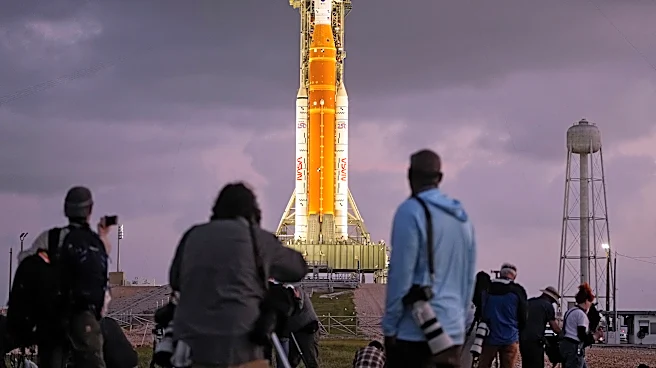
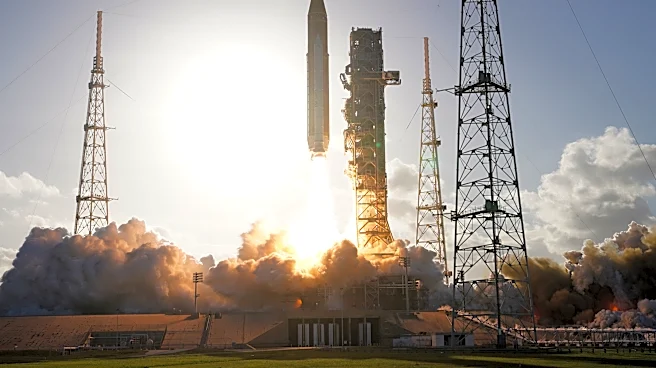
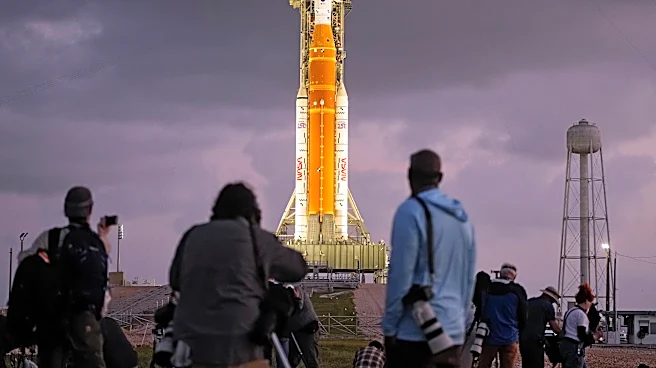
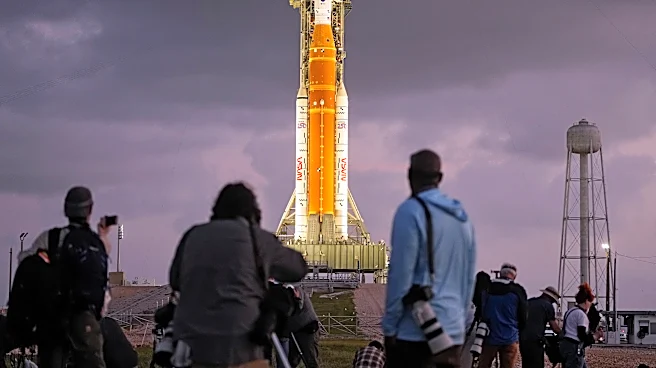
NASA's Artemis 2 mission, aimed at sending humans further into space than ever before, was launched from Florida earlier this week. Astronauts aboard the International Space Station (ISS) stayed up to witness the historic event, which marks a significant
evolution in humanity's presence in space since the Apollo era. The ISS crew, part of Expedition 74, watched the launch via NASA TV as the station was too far to see it directly. The launch was also observed by satellites and airplane passengers, offering a unique perspective of humanity's journey beyond Earth. The Artemis 2 crew will soon be able to see the ISS from a distance, a sight not possible during the Apollo missions.
Why It's Important?
The Artemis 2 mission represents a pivotal moment in space exploration, highlighting the advancements made since the Apollo era. The ability for astronauts on the ISS to witness the launch underscores the continuous human presence in space and the collaborative efforts in advancing space technology. This mission could pave the way for future lunar explorations and potentially deeper space missions, impacting scientific research and international cooperation in space endeavors. The event also showcases the growing capabilities of satellite technology in capturing and sharing space exploration milestones.
What's Next?
Following the launch, the Artemis 2 crew will journey towards the moon, with plans for an audio-only conversation with the ISS crew scheduled for April 7. This interaction will further demonstrate the interconnectedness of space missions and the collaborative spirit of international space agencies. The mission's success could lead to more ambitious projects, including potential lunar landings and deeper space explorations, fostering advancements in space technology and international partnerships.