


What's Happening?
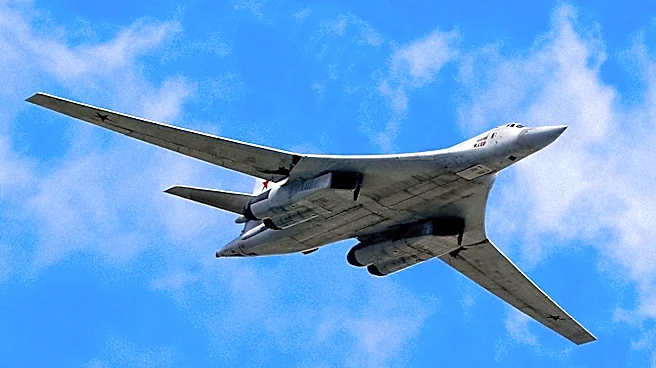
Serbia requested and received assistance from Russia to combat a large-scale fire in the Deliblato Sands Nature Reserve. On August 19, an Il-76 aircraft from the Russian Ministry for Civil Defence, Emergencies and Disaster Relief landed at Niš Airport.
Serbian officials, including Deputy Prime Minister and Minister of the Interior Ivica Dačić and Assistant Minister of Internal Affairs Luka Čaušić, stated that the decision was based on the need for a high-capacity aircraft capable of dropping large amounts of water, a capability they claimed the EU Civil Protection Mechanism lacked. The fire, which had been spreading since early August, destroyed thousands of hectares of forest and vegetation, leading to a local state of emergency and evacuations. Despite official claims of a purely humanitarian mission, the move has drawn significant geopolitical attention and questions regarding Serbia's decision to bypass the EU Civil Protection Mechanism initially.
Why It's Important?
This event highlights the complex geopolitical landscape in the Western Balkans and the ongoing influence of Russia in the region, even amidst its conflict in Ukraine. Serbia's decision to seek Russian assistance, despite being a candidate for EU membership, raises questions about its alignment and commitment to European integration. The incident also underscores the strategic importance of the Russian-Serbian Humanitarian Center in Niš, which Western capitals view with suspicion as potentially serving intelligence purposes. The controversy surrounding the flight path of the Russian aircraft over NATO member Bulgaria, and the speculation about its intelligence-gathering capabilities, further complicates regional security dynamics. This situation could strain relations between Serbia and the EU, as Brussels expressed that there could be no 'business as usual' with Russia. It also reveals how humanitarian aid can become a tool in broader geopolitical maneuvering, impacting regional stability and alliances.
What's Next?
The immediate aftermath saw Serbia activate the EU Civil Protection Mechanism on August 21, accepting offers of assistance from the EU, Germany, and Romania, including helicopters and fire and rescue teams. This move appears to be an attempt by Belgrade to balance its relations with both Moscow and Brussels, adopting a 'multi-vector approach.' However, the incident leaves several unanswered questions regarding Serbia's initial reluctance to activate the EU mechanism and the security implications of the Russian aircraft's flight. Future interactions between Serbia, Russia, and the EU will likely be scrutinized for further indications of Belgrade's geopolitical leanings. The ongoing presence and activities of the Russian-Serbian Humanitarian Center will also remain a point of contention and observation for Western powers, particularly concerning its potential dual-use capabilities and intelligence implications for regional security.
Beyond the Headlines
The incident transcends a simple humanitarian aid operation, revealing deeper ethical and strategic considerations. The use of a humanitarian mission by Russia, while simultaneously engaging in conflict in Ukraine, raises questions about the sincerity and intent behind such aid. The speculation regarding the Russian aircraft's potential intelligence-gathering activities during its flight over NATO airspace highlights the blurred lines between humanitarian assistance and strategic reconnaissance in contemporary geopolitics. This event could set a precedent for how countries in sensitive geopolitical positions navigate humanitarian crises, potentially leading to increased scrutiny of aid missions from non-allied nations. It also underscores the challenge for international bodies like the EU in ensuring that humanitarian aid remains apolitical and effective, especially when member or candidate states engage with actors perceived as adversaries. The long-term implications could include a re-evaluation of regional security protocols and a heightened awareness of potential 'hybrid operations' disguised as humanitarian efforts.