



What's Happening?
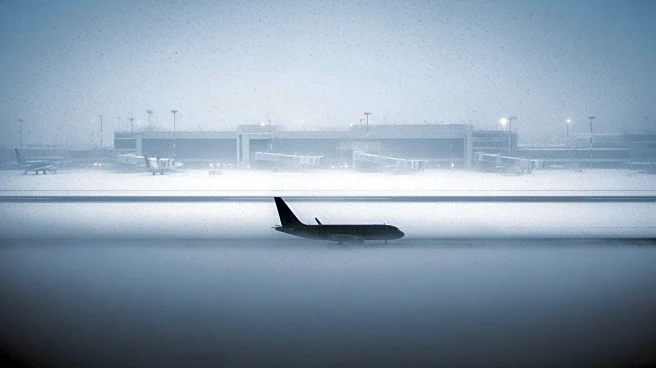
A severe winter storm has led to the cancellation of more than 9,000 flights across the United States over the weekend. Major airlines, including Delta, American, and Southwest, have issued travel waivers to allow passengers to change their plans without
penalties. The storm is expected to bring a mix of ice, snow, and frigid conditions, particularly affecting airports in North Texas, Oklahoma, Arkansas, Louisiana, and Tennessee. American Airlines has added extra flights to accommodate affected travelers, especially at its hub in Dallas/Fort Worth International Airport. Travelers are advised to monitor road conditions and check flight statuses due to the ongoing disruptions.
Why It's Important?
The widespread flight cancellations highlight the vulnerability of air travel to severe weather conditions, impacting thousands of passengers and causing significant logistical challenges for airlines. The economic implications are substantial, affecting not only the airlines but also related industries such as tourism and hospitality. The situation underscores the importance of robust contingency planning and communication strategies by airlines to manage customer expectations and minimize disruptions. The storm's impact on travel could also influence future infrastructure investments and policy decisions regarding weather preparedness and response.
What's Next?
As the storm progresses, airlines and airport authorities will continue to manage the operational challenges, potentially leading to further cancellations or delays. Travelers are expected to face ongoing disruptions, and airlines may need to adjust their schedules and resources to accommodate the backlog of passengers. The situation may prompt discussions among industry stakeholders about improving weather forecasting and response strategies to enhance resilience against similar events in the future.