
What's Happening?
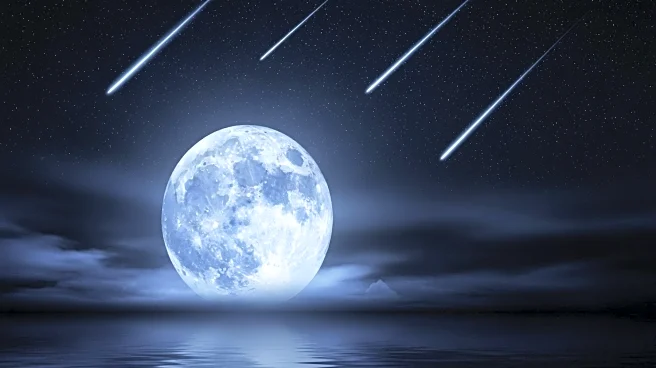
The first supermoon of 2026 will coincide with the Quadrantid meteor shower, creating a unique celestial event. The supermoon, which occurs when the moon is closest to Earth, will appear significantly
larger and brighter. However, this increased brightness may reduce the visibility of the Quadrantid meteor shower, which typically features around 25 meteors per hour. The event marks the conclusion of a series of supermoons that began in October 2025, with the next supermoon not expected until the end of 2026.
Why It's Important?
This event highlights the complex interactions between different astronomical phenomena and their impact on observational astronomy. The supermoon, while a spectacular sight, poses challenges for viewing the meteor shower, demonstrating the need for careful planning in astronomical observations. The event also serves as an opportunity to engage the public in astronomy, fostering interest and education in celestial events. The cultural and scientific significance of supermoons and meteor showers underscores their importance in both historical and contemporary contexts.
What's Next?
Following the January supermoon and meteor shower, the next major celestial event will be the Lyrid meteor shower in April. Observers are encouraged to find locations with minimal light pollution to enhance their viewing experience. The study of these events will continue to contribute to our understanding of lunar cycles and their effects on Earth, as well as the broader dynamics of the solar system.