






What's Happening?
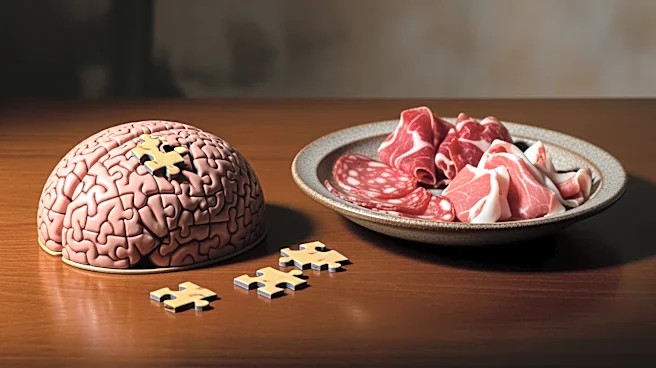
A study published in JAMA Network Open has found a potential link between meat consumption and dementia risk, specifically in individuals with certain genetic profiles. Conducted as part of the Swedish National Study on Ageing and Care, the research analyzed
data from over 2,000 older adults. It found that those with the APOE 3/4 and APOE 4/4 genotypes who consumed less meat had a higher risk of dementia compared to those with higher meat intake. This association was not observed in individuals without these genotypes. The study suggests that while processed red meat is generally linked to higher dementia risk, unprocessed meat might have protective effects for those with specific genetic predispositions.
Why It's Important?
This research is significant as it challenges existing dietary guidelines that often recommend reducing meat consumption to lower health risks. The findings highlight the complexity of dietary impacts on cognitive health, particularly in relation to genetic factors. With approximately one in four Americans carrying the APOE 3/4 or 4/4 genotype, the study's implications could affect dietary recommendations for a substantial portion of the population. It also underscores the need for personalized nutrition advice that considers genetic makeup, potentially leading to more effective strategies for dementia prevention.
What's Next?
Further research is needed to confirm these findings and explore the mechanisms behind the observed associations. This could involve more detailed studies on the types of meat consumed and their specific effects on cognitive health. Additionally, healthcare providers may need to consider genetic testing as part of dietary counseling for dementia prevention. The study also opens the door for broader discussions on personalized nutrition and its role in managing age-related cognitive decline.