






What's Happening?
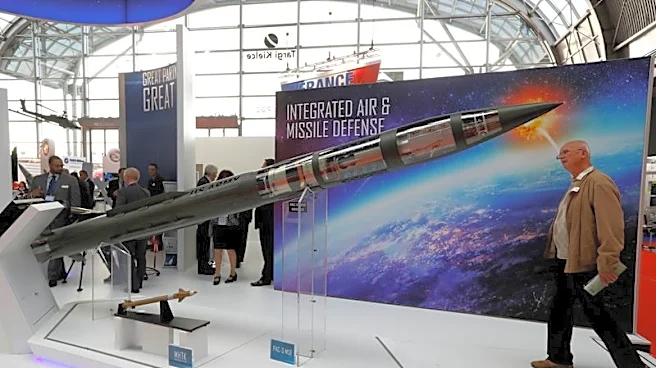
The Atomic Age was defined by a series of military projects that fundamentally changed global nuclear deterrence strategies. Key projects include the Manhattan Project, which developed the first atomic bomb, and Project Polaris, which introduced submarine-launched
ballistic missiles. These innovations created a credible second-strike capability, ensuring the United States could retaliate even after a nuclear attack. The Minuteman Program revolutionized missile forces with solid-fuel propulsion, enabling rapid-launch capabilities. These projects, among others, established the nuclear triad of land-based missiles, strategic bombers, and submarine-launched missiles, forming the backbone of modern deterrence strategies.
Why It's Important?
These military projects significantly influenced global politics and national security by reshaping nuclear deterrence strategies. The development of the nuclear triad ensured that the United States maintained a credible deterrent against potential adversaries. The introduction of submarine-launched ballistic missiles and solid-fuel ICBMs reduced vulnerability during crises and enhanced rapid-response capabilities. These innovations not only strengthened American nuclear deterrence but also influenced naval strategy worldwide. The enduring presence of these systems reflects their importance in modern defense planning and their role in maintaining strategic balance during the Cold War and beyond.
Beyond the Headlines
The legacy of these projects extends beyond their immediate military applications. They demonstrated the potential of technological innovation to reshape global politics and ushered in an era where nuclear deterrence became central to international security. The projects also highlighted the ethical and strategic challenges of nuclear weapons, prompting ongoing debates about arms control and disarmament. As technological advancements continue, the principles established during the Atomic Age remain relevant, influencing contemporary discussions on nuclear strategy and international security.