


What's Happening?
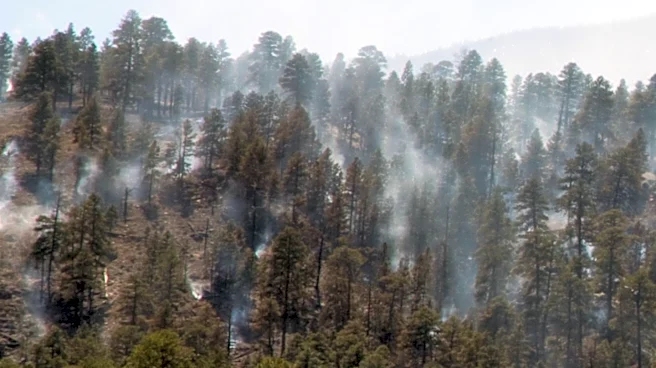
The Kingston Common Council in New York has unanimously voted 7-0 to implement temporary citywide burn bans. These bans will be enacted during periods when the state Department of Environmental Conservation (DEC) designates the wildfire risk as 'high'
or above. The legislation prohibits all outdoor fires, including bonfires, campfires, warming fires, outdoor fireplaces and chimneys, and open cooking fires. Exemptions are made for outdoor propane and charcoal grills and BBQ smokers. The DEC's wildfire risk map uses a color-coded system with ratings including low, moderate, high, very high, and extreme. A 'high fire danger' classification signifies conditions where fine fuels ignite easily, and fires spread rapidly, often becoming difficult to control. Council members Michael Ham, D-Ward 7, and Ruth Katz, D-Ward 8, were absent during the vote. The initiative aims to mitigate wildfire risks within the city.
Why It's Important?
This legislative action by Kingston lawmakers is important as it directly addresses the increasing threat of wildfires, a concern amplified by climate change. By proactively implementing burn bans based on state-issued risk assessments, the city aims to prevent potential disasters that could lead to significant property damage, environmental degradation, and pose a threat to public safety. The exemption for propane and charcoal grills acknowledges common household practices while still targeting the most dangerous types of open flames. This measure reflects a growing trend among local governments to adapt policies in response to changing environmental conditions and the heightened frequency of extreme weather events. It also highlights the role of state environmental agencies in providing critical data that informs local decision-making for public safety.
What's Next?
Following the approval, the temporary burn bans will be enforced by the Kingston Fire Department. Residents found in violation will be ordered to extinguish their fires, and persistent violations could lead to fines levied against the property or individual. One public commenter, Chelsea Villalba, emphasized the need for clear and comprehensive communication to all city residents, including those who do not use social media, to ensure awareness and compliance. The effectiveness of the ban will depend on public adherence and the city's ability to disseminate information broadly. Future actions may include public awareness campaigns and continued monitoring of wildfire risk levels by the DEC to determine when bans need to be activated or lifted.
Beyond the Headlines
The Kingston burn ban reflects a broader societal shift in how communities are confronting the tangible impacts of climate change. While the immediate goal is wildfire prevention, the underlying context, as noted by Marissa Marvelli, D-Ward 3, points to the global increase in climate-related disasters. This local ordinance serves as a micro-example of how environmental concerns are translating into direct policy changes at the municipal level. It also raises questions about the balance between individual freedoms and collective safety, particularly when environmental risks are involved. The need for effective communication strategies, as highlighted by public comment, underscores the challenge of ensuring public cooperation and understanding in the face of evolving environmental regulations.