








What's Happening?
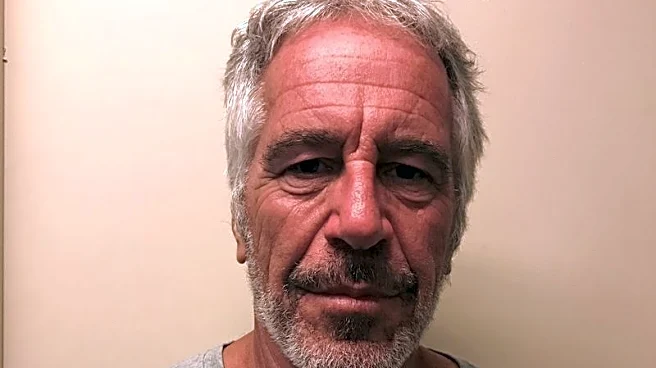
A note allegedly found by Jeffrey Epstein's former cellmate, Nicholas Tartaglione, after Epstein's first suspected suicide attempt has been released to the public. The note, which had been sealed in a courthouse vault, was made public following a request
by The New York Times and a ruling by U.S. District Judge Kenneth Karas. Tartaglione, a former police officer serving a life sentence for murder, claimed he found the note in a book after Epstein was discovered with a strip of bedsheet around his neck in their shared cell. The note, which has not been authenticated, contains statements about choosing the time to say goodbye and has sparked renewed interest in the circumstances surrounding Epstein's death.
Why It's Important?
The release of the note adds a new dimension to the ongoing scrutiny of Epstein's death, which has been surrounded by controversy and conspiracy theories. The note's content could influence public perception and legal interpretations of Epstein's mental state prior to his death. This development may also impact discussions about prison safety and the handling of high-profile inmates. The Justice Department's acknowledgment of seeing the note for the first time raises questions about the thoroughness of the investigation into Epstein's death.
What's Next?
The release of the note may lead to further investigations or legal actions, particularly if new information emerges regarding Epstein's death or the circumstances of the note's discovery. Legal experts and public officials may call for a review of the procedures followed by the Justice Department and the prison system in handling Epstein's case. Additionally, the note's release could lead to renewed public and media interest in Epstein's criminal activities and his connections to influential figures.