


What's Happening?
The United Nations Country Team (UNCT) in Syria released its September 2026 newsletter, highlighting ongoing partnerships aimed at supporting recovery and resilience across the country. The newsletter details various initiatives undertaken in collaboration
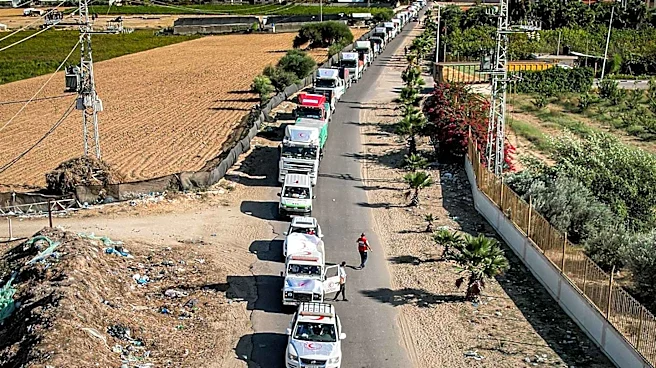
with national and local institutions, communities, and partners. Key efforts include strengthening livelihoods and food security, with vegetable production packages provided to 4,500 farming households and emergency animal feed reaching over 11,000 livestock-keeping households. Additionally, the UNCT is supporting women's economic empowerment through initiatives like the Bathraa Initiative, which plans to establish four women-led production hubs in Rural Damascus, Hama, and Tartous. The report also covers sustained healthcare and protection services, rehabilitation of water and electricity infrastructure, support for returning families, strengthening of national institutions, and skill development opportunities for adolescents and young people. These collective efforts address immediate needs while fostering long-term recovery and a sustainable future for Syrian communities.
Why It's Important?
These ongoing efforts by the UNCT in Syria are crucial for stabilizing communities affected by prolonged conflict and crisis. By focusing on food security and livelihoods, the initiatives directly address immediate humanitarian needs, preventing further deterioration of living conditions and reducing dependency on emergency aid. The emphasis on women's economic empowerment is particularly significant, as it not only contributes to household income and food security but also promotes gender equality and strengthens community resilience from within. Rebuilding essential infrastructure like water and electricity is fundamental for public health and economic activity, laying the groundwork for sustainable recovery. Furthermore, supporting returning families and providing skill development for youth are vital for social cohesion and preventing future instability, offering pathways for a more self-sufficient and peaceful society in Syria.
What's Next?
The UNCT in Syria is expected to continue its collaborative approach, working with national and local partners to implement and expand these recovery and resilience programs. Future efforts will likely focus on scaling up successful initiatives, such as the provision of agricultural support and the establishment of women-led production hubs, to reach more vulnerable populations. Continued monitoring and evaluation of these programs will be essential to adapt strategies to evolving needs and challenges on the ground. The UNCT will also likely seek sustained international funding and partnerships to ensure the long-term viability of these recovery efforts, as the country transitions from immediate humanitarian response to more sustainable development goals. The ongoing commitment to strengthening national institutions suggests a future focus on building local capacity for self-governance and service delivery.
Beyond the Headlines
The UNCT's work in Syria extends beyond immediate aid, aiming to foster long-term systemic change and self-reliance. The focus on partnerships underscores a broader strategy of empowering local actors and building sustainable frameworks rather than imposing external solutions. This approach is critical for ensuring that recovery efforts are culturally appropriate and have lasting impact, fostering a sense of ownership among Syrian communities. The integration of women's economic empowerment initiatives highlights a recognition of the crucial role women play in post-conflict recovery and economic revitalization. By investing in livelihoods, infrastructure, and human capital, the UNCT is not just addressing symptoms of crisis but is actively working to rebuild the social and economic fabric of the nation, laying the foundation for a more stable and prosperous future for Syria.