






What's Happening?
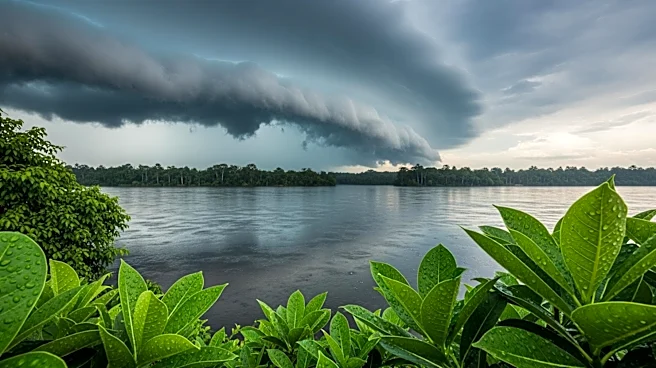
A study analyzing daily mortality rates in Brazil from 2003 to 2023 has revealed that extreme rainfall events have differing impacts on health outcomes across various states. The research, which focused on all-cause, cardiovascular, respiratory, and infectious
mortality, found substantial heterogeneity between states. Some regions experienced protective effects due to pollution washout and cooling, while others faced increased risks associated with flooding, contamination, and access disruption. The study utilized state-level conditional quasi-Poisson models to assess the effects of rainfall and temperature, pooling results through multivariate random-effects meta-analysis to derive national exposure-response curves.
Why It's Important?
The findings underscore the importance of tailored adaptation strategies to address the health impacts of extreme weather events in Brazil. The study highlights the need for state-specific interventions, such as improvements in drainage and sanitation, vector control, and continuity of emergency care. These measures are crucial for mitigating the adverse effects of extreme rainfall, particularly in states with heightened vulnerability due to climate regime, sanitation infrastructure, and health system robustness. The research provides valuable insights for policymakers aiming to enhance resilience against climate-related health risks.