








What's Happening?
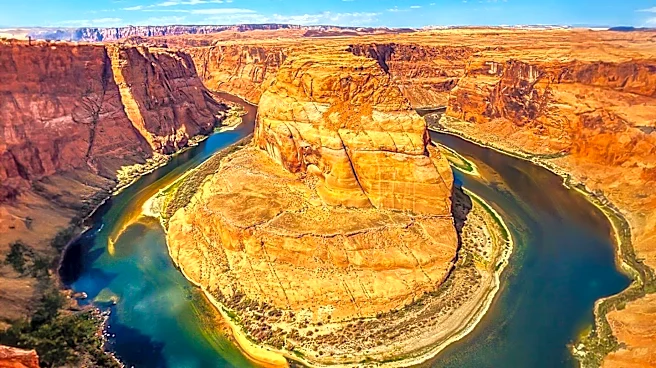
The Colorado River Basin is facing critical water shortages, with Lake Mead and Lake Powell at historically low levels, holding only 27% and 23% of their average storage, respectively. This has prompted Arizona, California, and Nevada to propose a plan
to conserve up to 1 million acre-feet of water through 2028. The plan includes significant reductions in water usage, particularly in agriculture, which accounts for a large portion of water consumption. The proposal also suggests increasing the reuse of municipal wastewater, with Arizona and Nevada already leading in this area. Additionally, there are discussions about potentially draining Lake Powell to support Lake Mead, and exploring desalination and cloud seeding as alternative solutions.
Why It's Important?
The water crisis in the Colorado River Basin has significant implications for millions of people and the agricultural sector in the Western United States. The proposed conservation measures aim to address the imbalance between water supply and demand, exacerbated by prolonged drought and climate change. The success of these measures could serve as a model for other regions facing similar challenges. However, the political and economic implications of reducing agricultural water use are complex, as it could impact food production and rural economies. The situation underscores the urgent need for sustainable water management practices in the face of climate change.
What's Next?
The proposed conservation measures will require cooperation among the states and stakeholders involved. There may be resistance from agricultural sectors due to the economic impact of reduced water allocations. Additionally, the feasibility of alternative solutions like desalination and cloud seeding will need further exploration and investment. Policymakers will need to balance immediate water needs with long-term sustainability, potentially leading to new regulations and incentives for water conservation. The ongoing negotiations and implementation of these measures will be critical in determining the future water security of the Colorado River Basin.