
What's Happening?
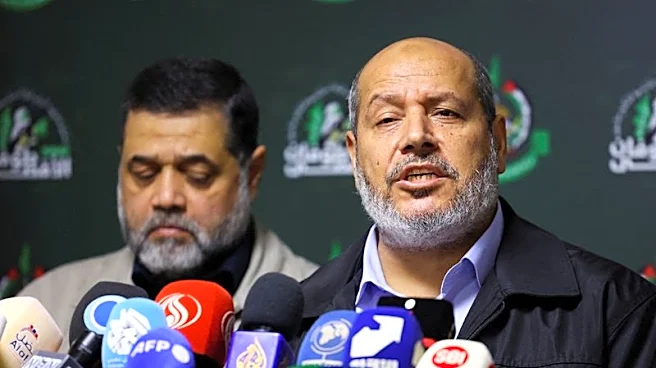
Israel is grappling with the decision of whether to launch another military offensive in Gaza or to pursue diplomatic solutions to manage the ongoing threat posed by Hamas. Despite previous military efforts
to dismantle Hamas, the organization has managed to rebuild and rearm, posing a renewed threat. The Israeli government is considering maintaining the status quo while working with international partners, including the U.S., to apply diplomatic and economic pressure on Hamas. However, there is skepticism about the effectiveness of negotiations, given past failures in political processes such as the Oslo Accords.
Why It's Important?
The decision on how to address the threat from Hamas has significant implications for Israel's security and regional stability. A military offensive could lead to further casualties and international criticism, while a diplomatic approach may not yield immediate results. The situation underscores the challenges Israel faces in balancing military and political strategies. The involvement of the U.S. and other international actors highlights the global interest in resolving the conflict. The outcome of Israel's decision could influence future peace efforts and the broader geopolitical landscape in the Middle East.
Beyond the Headlines
The ongoing conflict with Hamas reflects deeper issues within Israel's approach to security and diplomacy. The reliance on military solutions without a comprehensive political strategy has led to repeated cycles of violence. The failure of past political processes has contributed to a lack of confidence in diplomatic solutions. Addressing these underlying issues is crucial for achieving lasting peace and stability in the region. The international community's role in supporting political frameworks and reconstruction efforts could be key to breaking the cycle of conflict.