





What's Happening?
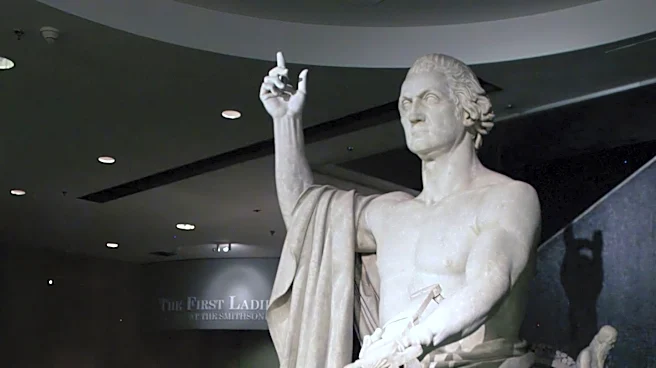
Lonnie G. Bunch III, Secretary of the Smithsonian Institution, has announced his resignation after seven years in the role. His departure comes during a period of significant pressure from the Trump administration, which has reportedly targeted the institution
and its leadership. Chief Justice John G. Roberts Jr., who serves as the Smithsonian’s chancellor, issued a statement acknowledging Mr. Bunch's contributions, stating that he "pursued excellence in the telling of our nation’s story" and that the Smithsonian had "benefited greatly from his wisdom, vision and leadership." Mr. Bunch is expected to retire at the end of the year. The Trump administration's actions have included an executive order accusing the Smithsonian of promoting narratives that portray American and Western values as harmful, and calls for cutting exhibits inconsistent with federal law. President Trump also reportedly complained on social media that the Smithsonian was "OUT OF CONTROL" and focused too much on the history of slavery.
Why It's Important?
This development highlights a significant tension between a prominent cultural institution dedicated to preserving and interpreting American history and the executive branch of the U.S. government. The Smithsonian, as a trusted source of information for many Americans, faces challenges to its independence and its approach to historical narratives, particularly concerning sensitive topics like racial injustice. The administration's efforts to influence the content of museum exhibits could set a precedent for how government funding and oversight interact with cultural and educational institutions. This situation raises questions about academic freedom, historical accuracy, and the role of museums in public discourse. The departure of a respected leader like Mr. Bunch under such circumstances could also impact the institution's ability to attract future leadership and maintain its reputation for scholarly integrity.
What's Next?
Mr. Bunch is slated to retire at the end of the year, prompting the search for a new Secretary for the Smithsonian Institution. The selection of his successor will be closely watched, as it could indicate the future direction of the institution's programming and its relationship with the government. Stakeholders, including historians, scholars, and civil society groups, are likely to continue advocating for the Smithsonian's independence and its commitment to presenting a comprehensive and accurate account of American history. The ongoing debate over the interpretation of historical events, particularly those related to racial injustice, is expected to persist, influencing public policy discussions and potentially leading to further scrutiny of other cultural institutions receiving federal funding.
Beyond the Headlines
The situation at the Smithsonian reflects a broader cultural and political struggle over national identity and historical memory in the United States. The administration's attempts to shape the narrative presented by a public institution like the Smithsonian touch upon fundamental questions about who controls history and how it is taught and understood. This extends beyond the Smithsonian, with reports indicating similar pressures on the National Park Service and the State Department regarding their portrayal of American history. The emphasis on "American exceptionalism" and the minimization of racial injustice in historical accounts could lead to a more sanitized and less critical understanding of the nation's past, potentially impacting educational curricula and public consciousness. The ethical implications of political interference in historical interpretation are profound, risking the erosion of trust in institutions traditionally seen as neutral arbiters of knowledge.