








What's Happening?
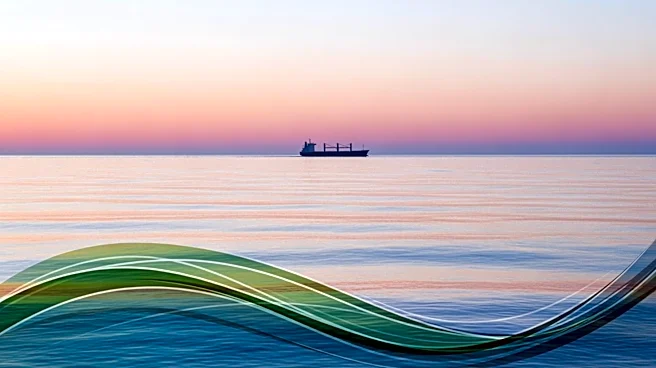
The International Maritime Organization (IMO) has announced the establishment of the North-East Atlantic Control Area (ECA), which is set to become the world's largest emission control area. This initiative, formalized during the Marine Environment Protection
Committee (MPEC 84) session, aims to significantly reduce emissions from ships by enforcing stricter limits on nitrogen oxides (NOx), sulfur oxides (SOx), and particulate matter. The ECA will cover an extensive area, stretching 200 nautical miles into the ocean and including regions from Greenland, Iceland, and the Faroe Islands to Ireland, the United Kingdom, France, Spain, and Portugal. The ECA will link existing control areas in the Baltic, North Sea, and Mediterranean with newly approved areas in the Norwegian Sea and Canadian Arctic. The initiative also includes a strategy to address marine plastic litter and amendments to the Ballast Water Management Convention.
Why It's Important?
The establishment of the North-East Atlantic ECA is a significant step in global efforts to reduce marine pollution and protect the environment. By imposing stricter emission limits, the IMO aims to decrease the harmful impact of shipping on air quality and marine ecosystems. This move is expected to drive technological advancements in cleaner shipping fuels and emissions control technologies, benefiting the maritime industry and contributing to global climate goals. Additionally, the focus on marine plastic litter and ballast water management highlights the IMO's commitment to addressing broader environmental challenges, which could lead to improved waste management practices and reduced pollution in the world's oceans.
What's Next?
The ECA is set to come into force on September 1, 2027, with full implementation by 2028. As the deadline approaches, shipping companies will need to adapt to the new regulations by investing in cleaner technologies and fuels. The development of a mandatory code for transporting plastic pellets is also underway, which will require compliance from the shipping industry to prevent environmental incidents. The IMO's ongoing efforts to address underwater radiated noise and other environmental issues suggest that further regulatory measures may be introduced in the future, prompting continued innovation and adaptation within the maritime sector.