






What's Happening?
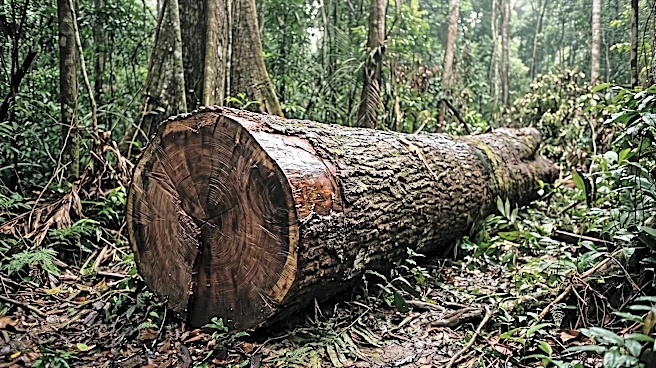
The Sentry, a U.S. investigative group focused on money behind conflict, reported on November 10, 2026, that two logging companies allegedly linked to Russia’s Wagner Group received tax delays and exemptions in the Central African Republic (CAR). These
firms, Bois Rouge and Forest Consulting Company (FCC), reportedly maintained their forest concessions despite apparent breaches of the country's forest code. The Sentry's report, titled 'Timber for the Taking,' examined six of CAR's 14 commercial forest concessions, which collectively cover nearly 40% of the nation's commercial logging area. Bois Rouge, sanctioned by the United States in March 2024, allegedly had a land tax payment of over US$900,000 delayed and received exemptions on property and business taxes, along with deferred VAT on imported equipment and reduced social charges. FCC reportedly received similar treatment, including a two-year delay on its upfront land tax and waivers on VAT and customs duties for imports. An audit cited by The Sentry indicated that SGS, the forestry ministry's inspection firm, could not verify approximately US$1.8 million in taxes and duties from 2021 to 2023 for these firms.
Why It's Important?
This report by a U.S. investigative group carries significant implications for U.S. foreign policy, sanctions enforcement, and international efforts to combat corruption and illegal logging. The U.S. had already sanctioned Bois Rouge in March 2024 due to its alleged ties to the Wagner Group, a Russian private military organization. The Sentry's findings suggest that despite these sanctions, the firm, along with FCC, may have benefited from preferential treatment in the CAR, potentially undermining the effectiveness of U.S. sanctions and broader international efforts to isolate entities linked to the Wagner Group. For U.S. readers, the direct link is the Treasury's 2024 designation of Bois Rouge, which applies to American persons and companies. The report also raises concerns about governance and transparency in the CAR's forestry sector, highlighting potential avenues for illicit financial flows and resource exploitation that could destabilize the region and conflict with U.S. interests in promoting good governance and rule of law globally. The call for enhanced due diligence on timber imports from CAR by the EU, U.S., and Britain underscores the potential for these alleged practices to impact global supply chains and consumer markets.
What's Next?
The Sentry's report recommends that the European Union consider reclassifying the Central African Republic from 'low' to 'standard' risk under its deforestation regulation, which would necessitate additional checks on timber imports. It also urges all jurisdictions, including the U.S. and Britain, to apply enhanced due diligence to wood originating from CAR and to identify individuals connected to sanctioned entities. While neither Bois Rouge nor FCC, nor the CAR government, has publicly responded to The Sentry's allegations, the U.S. Treasury's existing sanctions on Bois Rouge indicate a continued focus on entities linked to the Wagner Group. The report's findings could prompt further investigations by international bodies and national governments into the CAR's forestry sector and its dealings with foreign companies. The long-term consequences could include increased scrutiny of timber supply chains, potential adjustments to international trade policies concerning CAR, and intensified diplomatic pressure on the CAR government to address alleged breaches of its forest code and ensure greater transparency in its resource management.
Beyond the Headlines
The allegations extend beyond mere tax irregularities, touching upon the broader geopolitical landscape and the influence of non-state actors like the Wagner Group in resource-rich developing nations. The Sentry's report implicitly highlights how economic concessions, particularly in vital sectors like forestry, can be leveraged to secure political influence and financial gain for foreign entities, potentially at the expense of national sovereignty and sustainable development. The lack of verifiable tax payments and the alleged disregard for the forest code raise ethical questions about corporate responsibility and the role of international oversight in preventing resource exploitation. This situation also underscores the challenges faced by countries with weak governance structures in managing their natural resources transparently and equitably. The U.S. sanctions on Bois Rouge, coupled with The Sentry's findings, suggest a complex interplay of economic interests, geopolitical maneuvering, and the ongoing struggle for accountability in global resource industries, with potential long-term implications for environmental protection and human rights in the region.