
What's Happening?
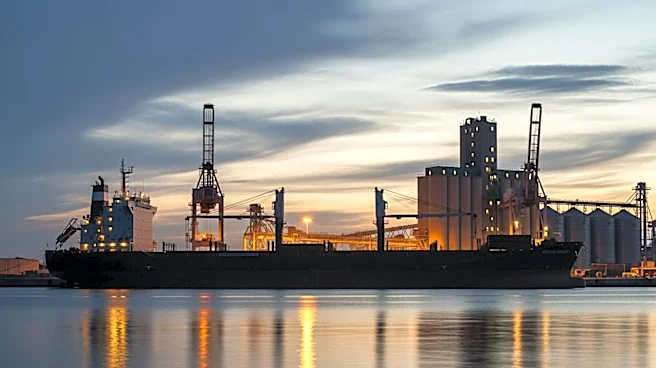
Ukraine has raised concerns over a Russian cargo ship, ABINSK, allegedly transporting grain stolen from Ukrainian territories occupied by Russia to Haifa Port in Israel. The Ukrainian Embassy in Israel has expressed
deep concern, citing vessel-tracking data that suggests the ship carried 43,765 tons of wheat from Crimea, a region under Russian occupation. Ukraine has called this act a violation of international law and its territorial sovereignty, urging Israel to investigate and ensure its territory is not used for illegal trade. The ship, reportedly operated by Strategic Grain Management, a Dubai-registered company, has been linked to transporting grain from occupied territories. Ukraine claims that Russia has exported over 2 million tons of grain from these areas, valued at approximately $400 million, to buyers in Africa, the Middle East, and Asia.
Why It's Important?
This incident highlights ongoing tensions between Ukraine and Russia, particularly concerning the exploitation of resources from occupied territories. The alleged illegal trade of grain not only impacts Ukraine's economy but also raises significant international legal and ethical concerns. If proven, such actions could strain diplomatic relations between Israel and Ukraine, as well as between Israel and other international partners. The situation underscores the broader geopolitical implications of the Russia-Ukraine conflict, affecting global trade routes and international law adherence. Additionally, the involvement of Iran in trading with Russia for military supplies in exchange for grain adds another layer of complexity to the geopolitical landscape.
What's Next?
Ukraine has urged Israeli authorities to thoroughly investigate the matter and act in accordance with international law. The outcome of this investigation could influence Israel's diplomatic relations and its stance on international trade regulations. If the allegations are confirmed, Israel may face pressure from the international community to take a firmer stance against Russia's actions. Furthermore, this situation could lead to increased scrutiny of maritime trade routes and the enforcement of international trade laws. The broader implications for international relations and trade policies remain to be seen, depending on the responses from the involved nations.
Beyond the Headlines
The incident raises questions about the enforcement of international trade laws and the role of neutral countries in conflicts involving resource exploitation. It also highlights the challenges faced by countries like Israel in balancing diplomatic relations with conflicting international partners. The situation could prompt discussions on the need for stronger international mechanisms to prevent the illegal trade of resources from conflict zones. Additionally, the involvement of Iran in the trade of military supplies for grain with Russia could have long-term implications for regional security dynamics and alliances.