
What's Happening?
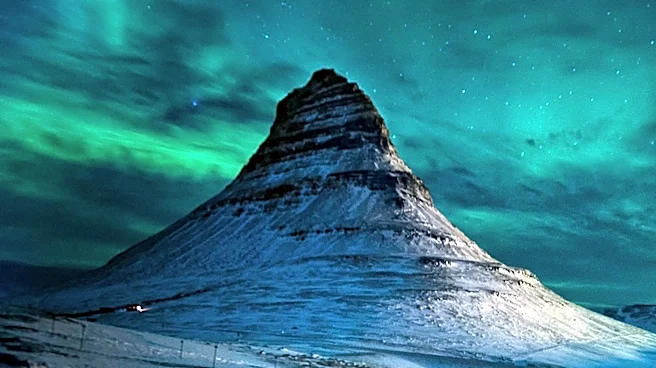
Several northern U.S. states, including Washington, Idaho, North Dakota, Minnesota, Wisconsin, Michigan, and Maine, are expected to experience visible auroras starting November 17 and continuing into November 18.
This celestial event is attributed to geomagnetic storm conditions resulting from a combination of a coronal hole and a coronal mass ejection (CME). The National Oceanic and Atmospheric Administration's (NOAA) Space Weather Prediction Center has issued a G1 (minor) geomagnetic storm alert for these dates. According to Spaceweather.com, the CME originated from sunspot region 4579 on November 14. CMEs are significant expulsions of solar plasma and magnetic fields that can disrupt Earth's magnetic field. Additionally, fast solar wind streams from coronal holes, which are regions on the sun with open magnetic fields, contribute to these geomagnetic storms. For optimal viewing, it is recommended to observe the auroras around midnight, away from light pollution, and from elevated vantage points with an unobstructed view of the northern horizon.
Why It's Important?
The potential visibility of the Northern Lights in a broader range of northern U.S. states offers a unique opportunity for residents and tourists to witness a natural phenomenon typically associated with higher latitudes. This event highlights the dynamic interaction between the sun and Earth's magnetosphere, demonstrating how solar activity can directly impact our planet. While primarily a visual spectacle, geomagnetic storms can sometimes affect technological infrastructure, though a G1 minor storm is generally not severe enough to cause widespread disruptions. For communities in the affected states, this could lead to increased interest in astrotourism and local viewing events, potentially boosting local economies through related services. Understanding these solar phenomena is crucial for space weather forecasting, which helps protect satellites, power grids, and communication systems from more intense solar events.
What's Next?
The NOAA Space Weather Prediction Center will continue to monitor solar activity and release updated aurora maps and forecasts. Residents in the northern U.S. states mentioned should check local weather conditions and aurora forecasts for the evenings of November 17 and 18 to maximize their chances of viewing the Northern Lights. Enthusiasts and photographers are advised to prepare their equipment, such as tripods and wide-angle lenses, and to seek out dark locations away from city lights. The intensity and exact visibility of the aurora can vary, so continuous monitoring of forecasts will be key. This event also serves as a reminder for the public and relevant industries to stay informed about space weather, as more significant geomagnetic storms could necessitate precautionary measures for critical infrastructure.
Beyond the Headlines
The occurrence of auroras in more southerly latitudes, even if minor, underscores the ongoing solar cycle and the sun's influence on Earth. Beyond the immediate visual appeal, these events provide valuable data for scientists studying solar physics and space weather. The ability to predict and understand these phenomena is becoming increasingly important in our technologically dependent world. Furthermore, the public's engagement with events like the Northern Lights can foster a greater appreciation for astronomy and natural sciences. It also subtly highlights the interconnectedness of our solar system, where events millions of miles away can create stunning displays in our night sky, prompting reflection on our place in the cosmos.