





What's Happening?
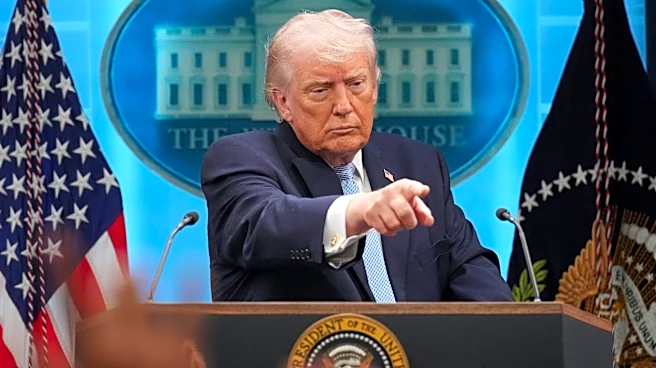
The U.S. war with Iran, lasting over five weeks, has resulted in a ceasefire agreement, but many of President Trump's objectives remain unmet. The goals included ending Iran's nuclear program, destroying its military capabilities, and achieving regime
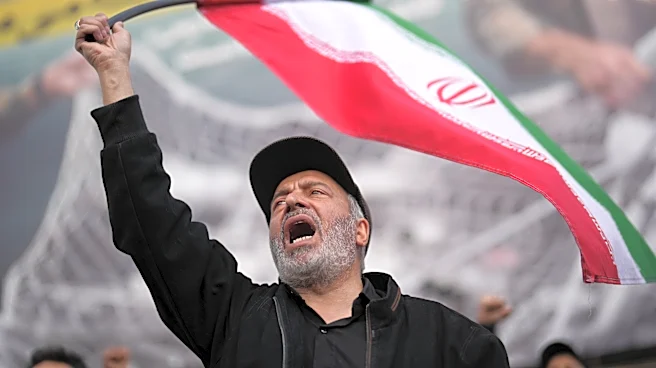
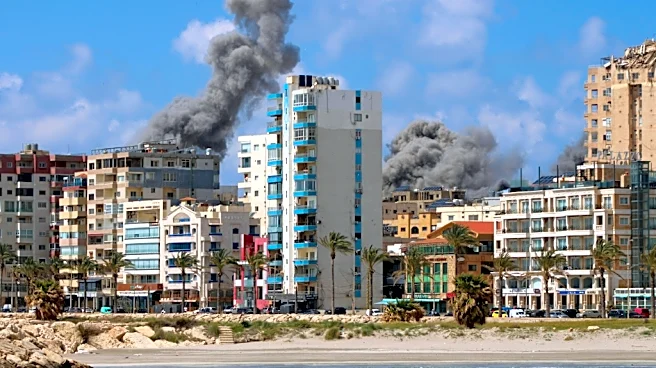
change. Despite military successes, Iran's government and military remain functional, and the Strait of Hormuz remains under Iranian control, creating a new crisis. Analysts suggest the war has led to a more hardline government in Tehran, potentially more determined to pursue nuclear weapons. The ceasefire, brokered by Pakistan, is holding, but reports of attacks on oil infrastructure persist.
Why It's Important?
The conflict has significant implications for U.S. foreign policy and global security. The failure to achieve key objectives may weaken U.S. influence in the region and embolden Iran. Control over the Strait of Hormuz affects global oil markets, potentially leading to higher prices and economic disruptions. The war has strained relations with U.S. allies, who were not warned of the attack, and has caused economic disruptions worldwide. The situation highlights the challenges of military intervention and the importance of diplomatic solutions in addressing complex geopolitical issues.
What's Next?
Negotiations will continue, with Iran likely to leverage its control over the Strait of Hormuz in talks. The U.S. may need to reassess its strategy and diplomatic approach to achieve its objectives. The international community will be closely monitoring developments, as the outcome of these talks could influence global security and economic conditions. Stakeholders, including political leaders and businesses, may need to adapt to changing dynamics in the region. The potential for renewed conflict remains, with both sides needing to navigate complex diplomatic challenges.