
What's Happening?
The Japanese government has called on China to revoke its recent export restrictions on dual-use items critical to Japan's defense forces. China's Ministry of Commerce announced a ban on January 6, prohibiting
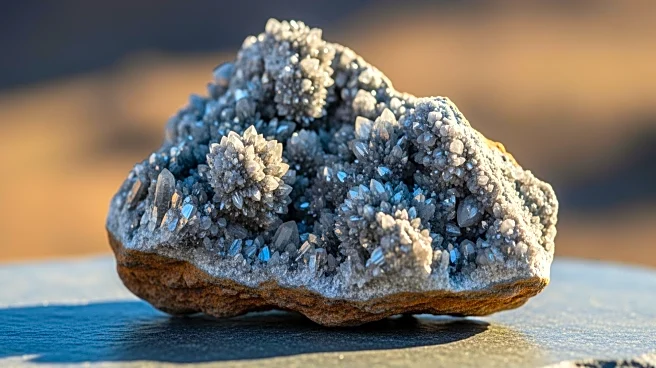
the export of dual-use goods to Japan, which are used for military purposes. Although specific items were not detailed, experts suggest that the restrictions could significantly impact the supply of rare earth minerals. These minerals are essential for manufacturing various products, including batteries, wind turbines, computers, and defense equipment like drones and missiles. The ban also affects end-users and producers involved in exporting or producing these items for Japan's military. Japan's Ministry of Foreign Affairs has labeled the move as 'unacceptable and deeply regrettable.' The restrictions follow tensions between Tokyo and Beijing, exacerbated by Japanese Prime Minister Sanae Takaichi's comments on potential responses to a naval blockade of Taiwan, which China viewed as interference in its domestic affairs.
Why It's Important?
The export restrictions imposed by China could have significant implications for Japan's defense industry and broader economic interests. Rare earth minerals are crucial for various high-tech and defense applications, and any disruption in their supply could hinder Japan's ability to produce essential military equipment. This situation underscores the strategic importance of rare earth minerals and the geopolitical leverage they provide to countries like China, which dominate their production. The restrictions also highlight the fragile nature of international supply chains and the potential for geopolitical tensions to impact global trade. For the U.S., which has faced similar restrictions in the past, this development could prompt further efforts to diversify supply chains and reduce dependency on Chinese exports.
What's Next?
Japan is currently assessing the full impact of China's export restrictions on its industries. The Japanese government may seek diplomatic channels to negotiate a resolution or explore alternative sources for critical minerals. This situation could also lead to increased collaboration with allies, including the United States, to develop more resilient supply chains. Additionally, Japan might accelerate its efforts to invest in domestic production capabilities or seek partnerships with other countries to secure a stable supply of rare earth minerals. The ongoing tensions between Japan and China could further strain their bilateral relations, potentially affecting other areas of trade and cooperation.