








What's Happening?
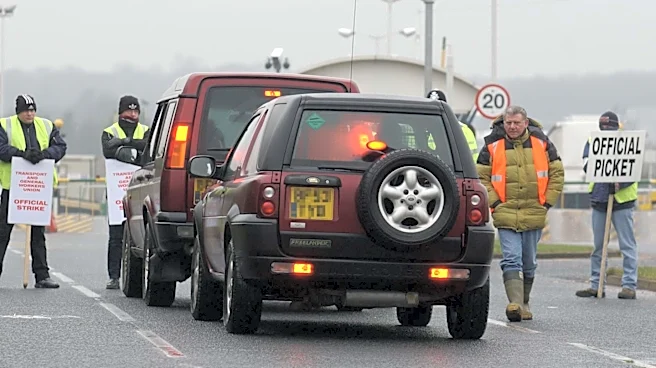
London Underground drivers, represented by the Rail, Maritime and Transport (RMT) union, have announced eight 24-hour strikes scheduled between November 2026 and February 2027. The industrial action is a response to Transport for London's (TfL) proposal
for a voluntary four-day working week. The RMT union argues that TfL's plan, which includes a new Trains Modernisation Framework, would lead to longer shifts, earlier starts, later finishes, and more unpredictable schedules for drivers. They also express concerns about potential job cuts, intensified working conditions, and the erosion of existing terms and conditions. The strikes are set to begin at noon on November 26, 2026, with subsequent dates including December 17 and 19, January 4 and 6, and February 17, 23, and 25, 2027. Each walkout will last 24 hours. This dispute has created a division between the RMT and another union, the Associated Society of Locomotive Engineers and Firemen (ASLEF), which supports the voluntary four-day week arrangement.
Why It's Important?
These strikes pose a significant threat to public transport in London, particularly during the critical Christmas and New Year travel periods. Businesses, especially those in retail and hospitality, rely heavily on public transport to bring customers and staff into central London during this peak trading season. Disruptions could lead to substantial economic losses for these sectors. The disagreement also highlights broader labor relations issues concerning work-life balance, job security, and the implementation of new working models. The RMT's stance reflects a concern among some labor groups that 'flexible' working arrangements can sometimes mask efforts to intensify work or reduce staff. Conversely, ASLEF's support for the plan suggests that some unions view such arrangements as beneficial for workers, offering more time off. The outcome of this dispute could influence future negotiations over working conditions and schedules in other public service sectors.
What's Next?
The planned strikes will proceed unless an agreement is reached between the RMT union and Transport for London. The first strike is scheduled for November 26, 2026, followed by several more through February 2027. BusinessLDN has urged both parties to reach an urgent agreement to prevent widespread disruption. TfL has stated that the proposed changes would be voluntary, allowing drivers to continue a five-day pattern if they prefer, and that the four-day week would involve a reduction in actual working hours for most drivers. However, the RMT remains firm in its opposition, demanding a 32-hour, four-day week with no reduction in pay and expressing concerns about the broader implications of TfL's modernization framework. Further negotiations are expected, but without a resolution, Londoners and visitors face significant travel disruptions during the upcoming holiday season and into the new year.
Beyond the Headlines
This dispute extends beyond immediate travel disruptions, touching upon the evolving nature of work and the balance of power between labor unions and management in the context of modernization. The RMT's resistance to TfL's proposed four-day week, despite it being framed as voluntary, underscores a deeper mistrust regarding management's intentions and the potential for such changes to erode long-standing worker protections. The division between RMT and ASLEF also highlights differing union strategies and priorities in adapting to new workplace models. This situation could set a precedent for how similar proposals are received and negotiated in other industries, particularly those with strong union representation. It also brings to the forefront the debate about what constitutes a 'genuine' four-day work week – whether it's about reduced hours for the same pay or a compression of existing hours into fewer, longer days, and the impact on worker fatigue and safety.