





What's Happening?
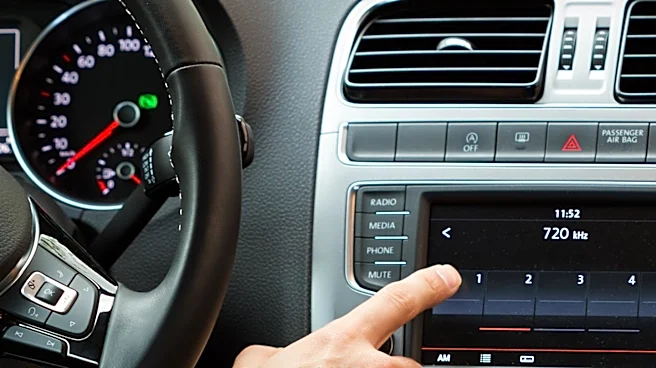
A recent study conducted by a Swedish consumer publication has revealed that the increasing use of touchscreens in modern vehicles is leading to greater driver distraction. The study tested various new vehicles and found that drivers are required to look
away from the road for longer periods to operate basic functions compared to a similar test conducted four years ago. The average distance traveled while completing tasks such as adjusting climate control and changing radio stations has increased from 756 meters to 813 meters. The Mazda CX-60 was noted as the worst performer, requiring 1,137 meters to complete tasks, while the Volvo XC60 performed best among modern cars, requiring 485 meters. The study highlights the safety concerns associated with the shift from physical controls to touchscreen interfaces in vehicles.
Why It's Important?
The findings of this study are significant as they underscore the potential safety risks associated with the growing trend of touchscreen interfaces in vehicles. As drivers are required to divert their attention from the road for longer periods, the likelihood of accidents increases, posing a threat to road safety. This issue is particularly relevant in the U.S., where car manufacturers have widely adopted touchscreen technology. The study's results may prompt automakers to reconsider the design of vehicle interfaces to enhance safety. Additionally, regulatory bodies may use this data to implement stricter safety standards for in-car technology, potentially influencing future vehicle designs and consumer choices.
What's Next?
In response to these findings, automakers may face pressure to redesign vehicle interfaces to reduce driver distraction. This could involve reintroducing physical controls or developing more intuitive touchscreen systems that require less driver attention. Safety organizations and regulatory bodies might also consider updating testing standards and guidelines to address the risks associated with touchscreen technology. As the automotive industry continues to innovate, balancing technological advancements with safety will be crucial to ensuring the well-being of drivers and passengers.