


What's Happening?
The Gas Turbine Research Establishment (GTRE), a key laboratory under India's Defence Research and Development Organisation (DRDO), has completed the submission phase for Expressions of Interest (EOI) to find a Development-cum-Production Partner (DcPP)
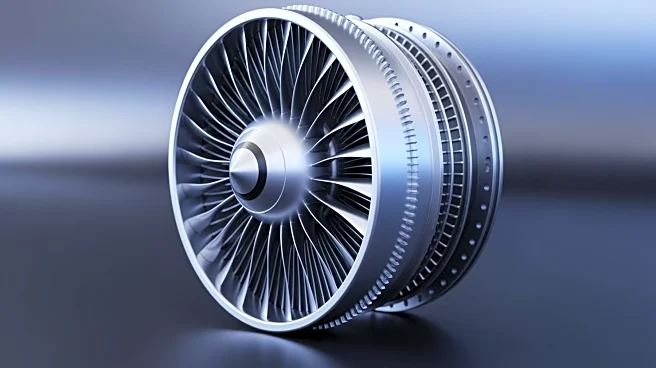
for its Advanced High Thrust Class Aero Engine (AHTCE). This initiative is part of India's effort to reduce reliance on foreign powerplants, such as the American GE F404 and F414 engines currently used in the Tejas fighter fleet. The new 120 kN class turbofan engine is intended for the Advanced Medium Combat Aircraft (AMCA), India's upcoming fifth-generation stealth fighter. The project aims to develop a high-performance engine capable of supercruise and high maneuverability, essential for the AMCA Mk-2 and future unmanned combat aerial vehicles (UCAVs). The selected industry partner will be responsible for manufacturing and integrating approximately 2,500 components, with GTRE maintaining core design authority.
Why It's Important?
This development is significant for India's defense sector as it represents a strategic move towards self-reliance in military technology. By developing an indigenous engine, India aims to secure its defense capabilities and reduce dependency on foreign suppliers, which can be critical in times of geopolitical tensions. The project also seeks to establish a robust domestic defense ecosystem, capable of handling advanced manufacturing materials and technologies. This could lead to significant economic benefits, including job creation and technological advancements within the country. Additionally, the project opens avenues for international cooperation, potentially involving technology transfer agreements that could further enhance India's aerospace capabilities.
What's Next?
With the EOI phase concluded, GTRE will evaluate the submissions to shortlist qualified Indian enterprises. The selected partner will embark on a 10 to 12-year development journey, with the first prototype engine test firing targeted for 2030. High-level discussions with foreign aerospace companies, such as France's Safran, are ongoing to explore co-development opportunities. These partnerships aim to ensure comprehensive technology transfer, allowing India to retain intellectual property rights and control over future upgrades. The project's success could pave the way for further advancements in India's defense technology and manufacturing sectors.