




What's Happening?
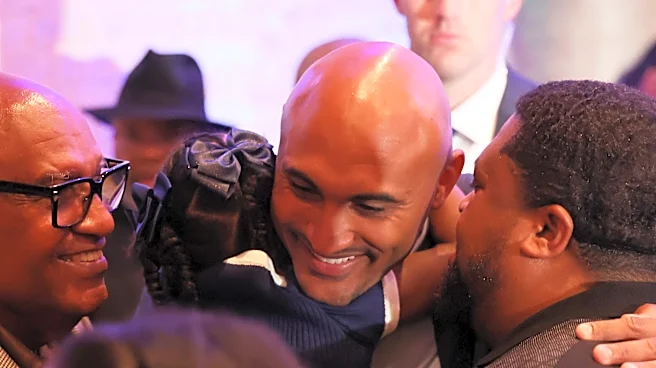
Yolanda Renee King, granddaughter of Rev. Dr. Martin Luther King Jr. and Coretta Scott King, cast her first ballot in Atlanta, Georgia, on Tuesday, November 3. The 18-year-old Columbia University freshman, accompanied by her parents Martin Luther King III
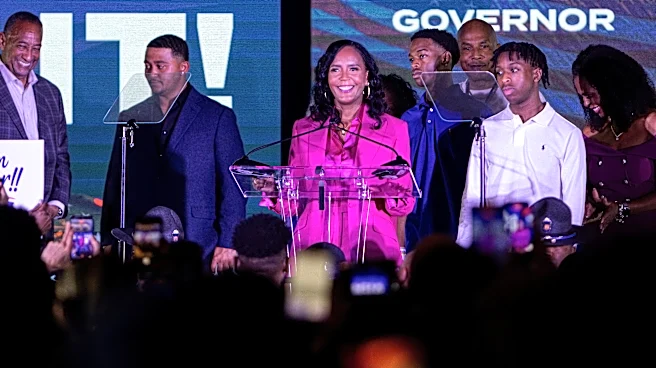
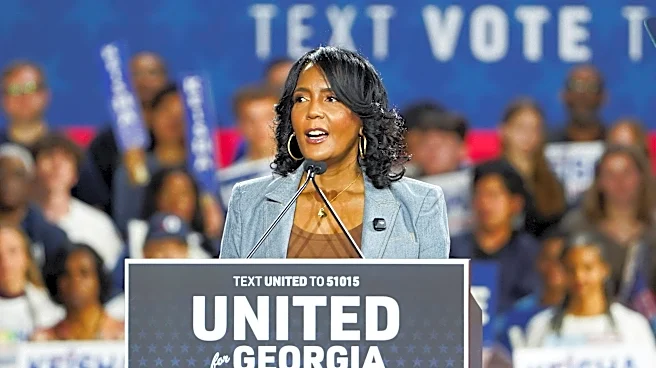
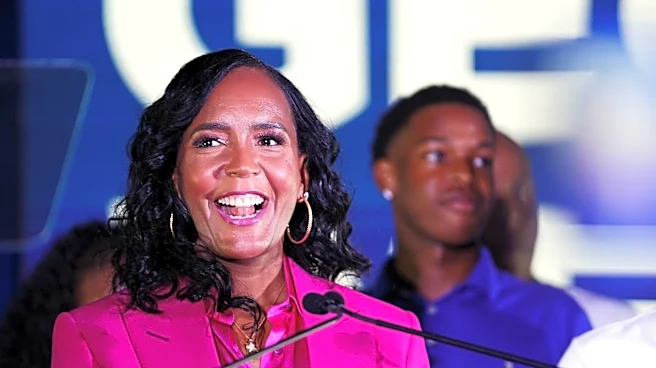
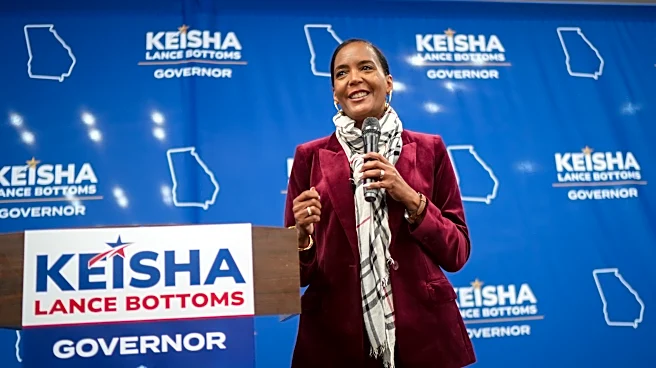
and Arndrea Waters King, described the experience as rewarding despite a minor technical difficulty with the voting machine. King highlighted the significance of this milestone, connecting it to her family's legacy in the fight for voting rights, which culminated in the Voting Rights Act of 1965. Her first election coincided with the 2026 midterm elections, which saw Democratic victories, including Keisha Lance Bottoms becoming Georgia's first Black woman elected governor. King expressed pride in the participation of young voters, countering the perception of Gen Z as politically disengaged, and emphasized that her generation is vocal about societal issues. She views voting as a crucial responsibility for those who care about global challenges and disparities.
Why It's Important?
Yolanda Renee King's participation in the electoral process carries significant symbolic weight due to her lineage, reinforcing the enduring importance of voting rights in American society. Her public discussion of her first voting experience aims to inspire younger generations to engage in civic duties, particularly at a time when youth political engagement is often scrutinized. By connecting her act of voting to her grandparents' historic struggle, King underscores that the right to vote is a hard-won privilege that requires active participation to maintain and strengthen democracy. Her call for sustained engagement beyond election day highlights a critical aspect of democratic health: holding elected officials accountable and continuously advocating for change. This perspective is vital for fostering a more informed and active electorate, potentially influencing future voter turnout and the political landscape.
What's Next?
Following her first vote, Yolanda Renee King is advocating for continued civic engagement beyond the immediate excitement of election victories. She urges voters, especially young people, to remain active, communicate with their leaders, and hold them accountable for their promises. King emphasizes that the recent Democratic successes should be seen as a starting point for ongoing advocacy rather than an endpoint. She plans to continue her work in social justice, drawing on her academic pursuits at Columbia University. Her analogy comparing midterm elections to midterm exams suggests a long-term view of political participation, implying that consistent engagement is necessary for meaningful change. This focus on sustained action indicates that King will likely remain a prominent voice encouraging active citizenship and political accountability among her peers and the broader public.
Beyond the Headlines
Yolanda Renee King's journey into voting and activism extends beyond the immediate political outcomes, touching upon deeper themes of legacy, identity, and generational responsibility. Despite carrying one of the most recognizable names in American civil rights, King's parents have encouraged her to forge her own path, emphasizing her individual worth beyond her famous grandparents. This approach highlights the challenge and opportunity for descendants of historical figures to honor their heritage while developing their unique contributions. Her activism, which began at age nine with the March for Our Lives, demonstrates a commitment to social justice that is both inherited and personally cultivated. This narrative underscores the evolving nature of activism, where historical struggles for rights like voting are now complemented by contemporary issues such as gun violence, reflecting a continuous fight for a more just society across generations.