
What's Happening?
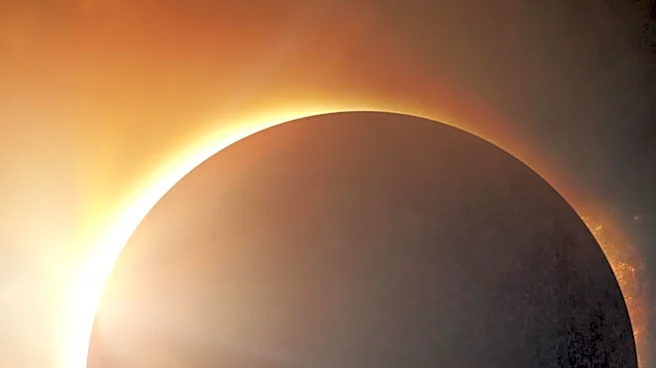
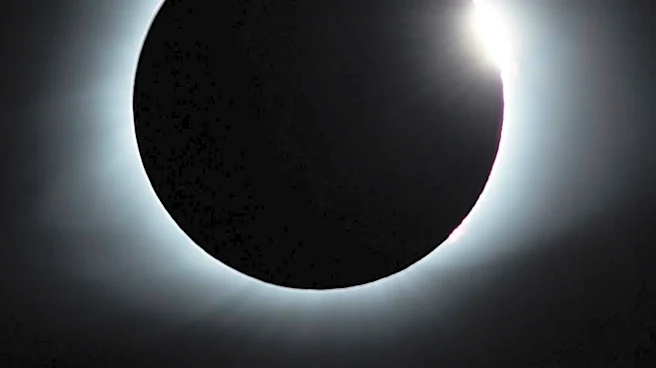
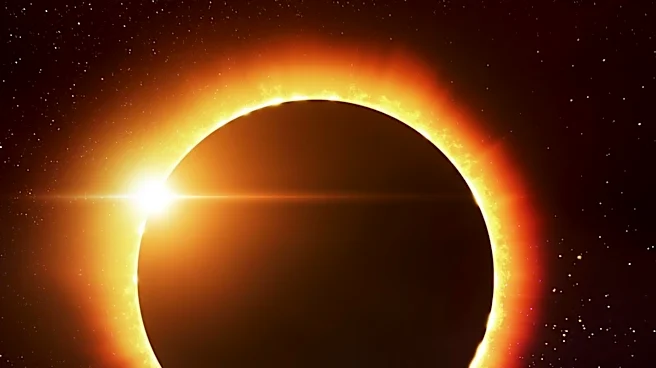
On August 12, 2026, a total solar eclipse will occur, marking the first such event in Europe since 1999. The eclipse will be visible along a narrow path of totality that includes Greenland, Iceland, northern
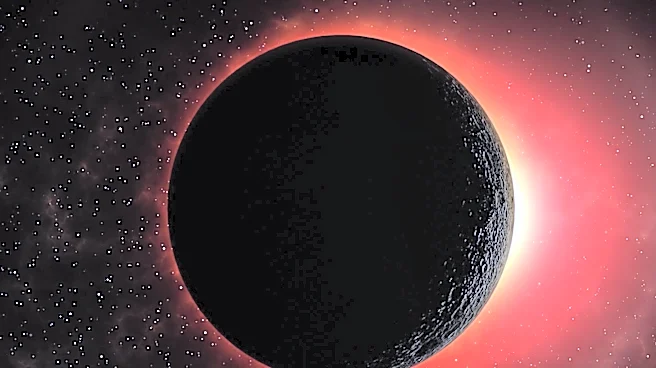
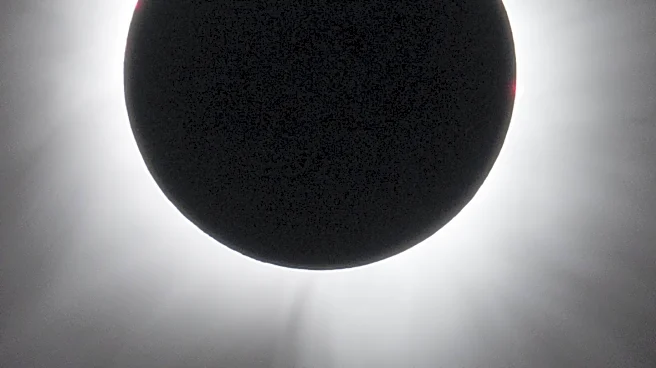
Spain, and the Balearic Islands. During this event, the moon will completely cover the sun, revealing the sun's corona and turning day into twilight along the path of totality. In addition to Europe, parts of the northeastern United States and eastern Canada will experience a partial solar eclipse, where the moon will appear to take a bite out of the sun. The event is expected to attract millions of skywatchers, with live reporting planned from key locations in Greenland and Spain.
Why It's Important?
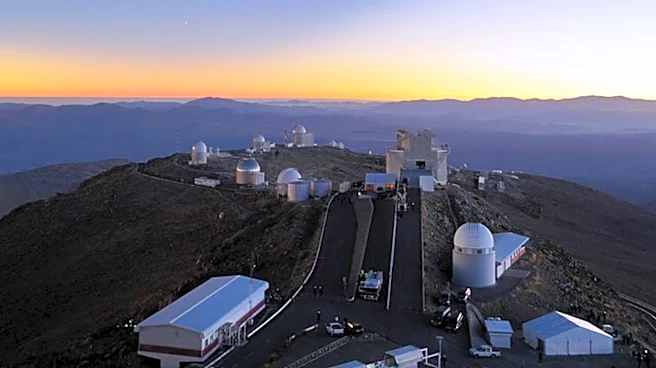
The total solar eclipse presents a rare opportunity for scientific observation and public engagement with astronomy. Such events can significantly boost interest in space science and education, as they offer a tangible demonstration of celestial mechanics. Economically, regions within the path of totality often see increased tourism, as enthusiasts travel to witness the spectacle. This influx can benefit local businesses and hospitality sectors. Additionally, the eclipse provides a platform for scientific research, allowing astronomers to study the sun's corona and other phenomena that are only visible during totality.
What's Next?
As the eclipse approaches, preparations are underway to accommodate the influx of tourists and researchers. Local governments and businesses in the path of totality are likely to implement special measures to manage crowds and ensure safety. Educational institutions and science organizations may also organize events and workshops to maximize public engagement. Following the eclipse, data collected by scientists will be analyzed to enhance understanding of solar and atmospheric phenomena.