



What's Happening?
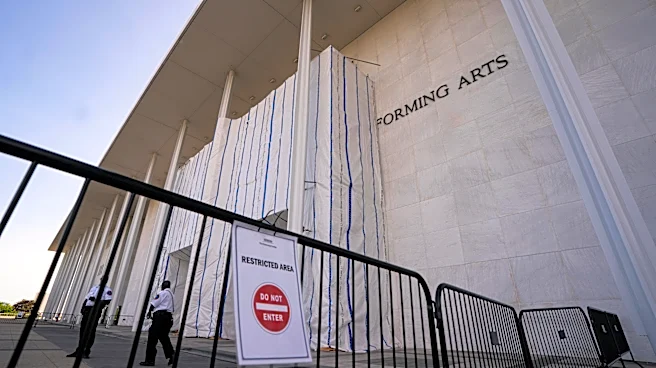
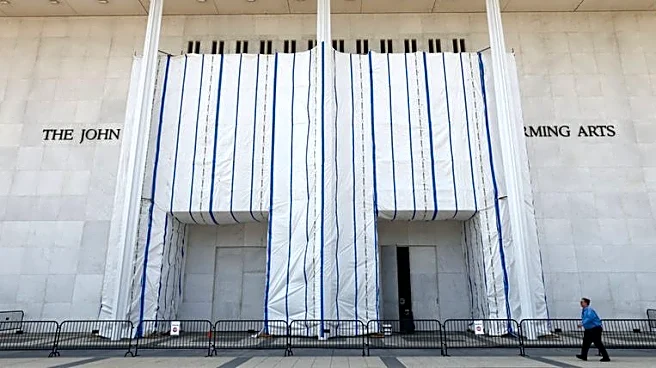
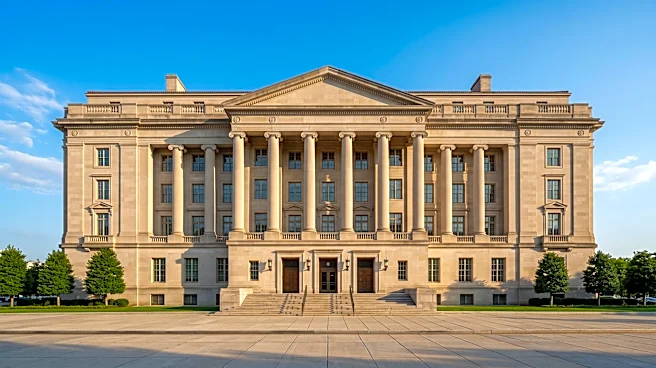
The Trump administration has warned that the John F. Kennedy Center for the Performing Arts in Washington D.C. could be demolished if a proposed $250 million renovation is not completed. This warning was made in a court filing by the Department of Justice,
arguing that without these efforts, the center would deteriorate into an unsafe and decrepit structure requiring demolition. The administration suggested that an outdoor amphitheater overlooking the Potomac River could be built in its place. This development is part of an ongoing legal dispute concerning President Trump's efforts to have his name associated with the Kennedy Center. The center's board, largely composed of Trump appointees, voted to add the phrase 'Restored and Renovated by President Donald J. Trump' to the building's signage and to name the grounds the 'President Donald J. Trump Plaza.' This action follows a previous attempt to rename the center, which a federal judge ruled against, stating that only Congress has the authority to change the Kennedy Center's name.
Why It's Important?
This situation highlights a significant conflict between the executive branch, a federal court, and cultural institutions over historical preservation and naming rights. The threat of demolishing a national cultural landmark like the Kennedy Center, established by Congress as a living memorial to President John F. Kennedy, raises concerns about the politicization of public assets and the potential disregard for established legal and historical precedents. The administration's argument that the center is in a 'financial and structural death spiral' without President Trump's intervention suggests a leverage tactic to push through desired changes, including the prominent display of his name. This could set a precedent for how future administrations interact with and potentially influence national cultural institutions, impacting their autonomy and historical integrity. The dispute also underscores the broader implications of presidential appointments to the boards of such institutions, potentially shifting their operational and symbolic direction.
What's Next?
A federal judge is scheduled to hear arguments regarding a fresh legal challenge to President Trump's efforts to place his name on the Kennedy Center. Representative Joyce Beatty, a Democratic congresswoman and Kennedy Center board member, has requested an injunction to prevent President Trump's name from being restored to the facade. The administration has indicated it will pause its latest round of planned changes to the building until September 8. The outcome of this hearing will determine the immediate future of the proposed renovations and the naming dispute. Legal challenges and potential protests from historic preservation groups and activists are anticipated if the administration proceeds with aggressive actions, such as demolition. The situation could also lead to further congressional involvement, given that Congress originally established the Kennedy Center and a federal judge has ruled that only Congress can change its name.
Beyond the Headlines
The controversy surrounding the Kennedy Center extends beyond mere renovation and naming rights, touching upon deeper issues of legacy, historical memory, and the role of cultural institutions in a democratic society. The administration's assertion that the center is 'structurally unsound, fundamentally unsafe, and embarrassing to the Nation’s Capital' could be interpreted as an attempt to justify significant alterations or even demolition, potentially erasing or recontextualizing a part of American history. The comparison of the proposed inscription to acknowledgments of major donors at other cultural institutions raises questions about the commercialization of public memorials and the appropriate balance between private contributions and public heritage. This dispute also reflects a broader cultural battle over how national symbols and institutions are perceived and controlled, particularly in an era of heightened political polarization. The potential for a national landmark to be 'leveled' due to political disagreements underscores the fragility of cultural heritage in the face of executive power.