




What's Happening?
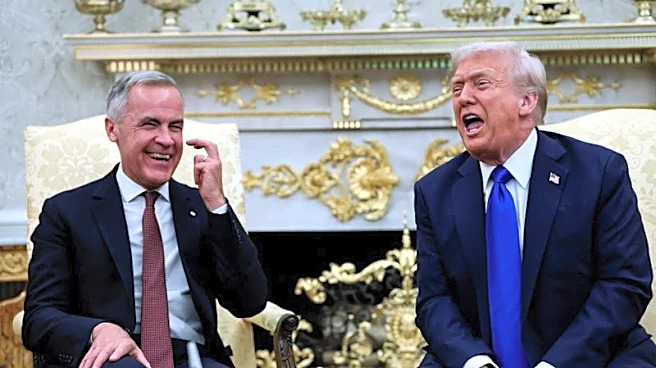
Canadian Prime Minister Mark Carney has expressed concerns over the economic relationship between Canada and the United States, highlighting it as a weakness that needs addressing. In a recent video address, Carney criticized the high tariffs imposed
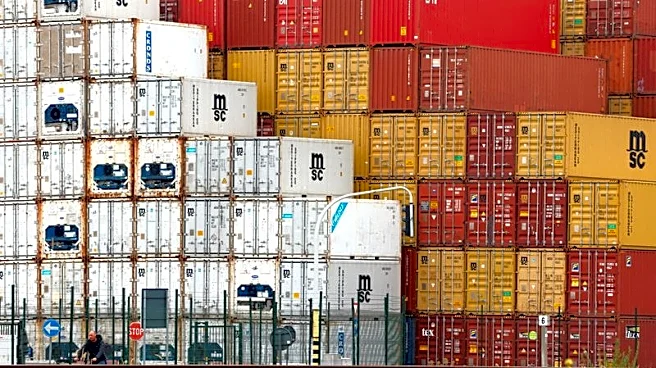
by President Trump, which have adversely affected Canadian workers in the auto and steel industries. He noted that these tariffs have created uncertainty, causing businesses to hesitate in making investments. Carney emphasized the need for Canada to diversify its economic ties and reduce reliance on the U.S. He plans to provide regular updates on his government's efforts to attract new investments and sign trade deals with other countries. Carney also mentioned the importance of increasing Canada's defense spending and reducing trade barriers within the country.
Why It's Important?
The economic policies of the U.S., particularly under President Trump, have significant implications for Canada, given the close economic ties between the two nations. The imposition of tariffs has not only strained the relationship but also impacted industries critical to the Canadian economy. Carney's call for diversification reflects a strategic shift aimed at reducing economic vulnerability and ensuring stability. This move could lead to a reconfiguration of trade relationships in North America, potentially affecting industries and workers on both sides of the border. The emphasis on reducing reliance on the U.S. underscores a broader trend of countries seeking to mitigate risks associated with economic dependencies.
What's Next?
Carney's government is expected to pursue new trade agreements and investment opportunities to strengthen Canada's economic position. The upcoming review of the North American Free Trade Agreement (NAFTA) could serve as a platform for renegotiating terms that better align with Canada's interests. Additionally, Carney's focus on clean energy and defense spending suggests a strategic pivot towards sectors that could offer long-term economic benefits. The Canadian government's actions in the coming months will likely be closely watched by both domestic and international stakeholders, as they could influence broader economic and geopolitical dynamics in the region.