
What's Happening?
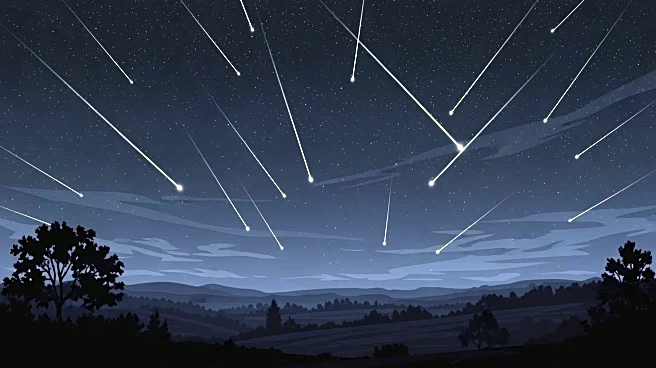
The annual Geminid Meteor Shower is set to peak over Indiana on December 13 and 14, offering stargazers a spectacular celestial display. Under ideal conditions, up to 120 meteors per hour could be visible.
The meteors will appear to streak from the constellation Gemini, near the bright star Castor, which rises above the eastern horizon a few hours after sunset. The waning crescent moon will rise around 2 a.m. on December 14, potentially making it more challenging to spot the fainter meteors. The event coincides with the approach of the winter solstice on December 21, when daylight will begin to increase. The Weather Channel notes that winter's colder night skies, which hold less moisture than summer skies, generally offer clearer conditions for stargazing.
Why It's Important?
The Geminid Meteor Shower is one of the most anticipated astronomical events of the year, drawing interest from both amateur and professional astronomers. It provides an opportunity for educational outreach and public engagement with astronomy, fostering a greater appreciation for space science. The event also highlights the natural beauty and wonder of the night sky, encouraging people to spend time outdoors and connect with the cosmos. For Indiana residents, the meteor shower offers a unique chance to witness a natural phenomenon that can inspire curiosity and wonder about the universe.
What's Next?
As the Geminid Meteor Shower peaks, local astronomy clubs and observatories may host viewing events to educate the public and enhance the stargazing experience. Weather conditions will play a crucial role in visibility, and clear skies will be essential for optimal viewing. Following the meteor shower, the focus will shift to the winter solstice on December 21, marking the gradual increase in daylight hours. This period may also see increased interest in other astronomical events and phenomena as people become more engaged with observing the night sky.