



What's Happening?
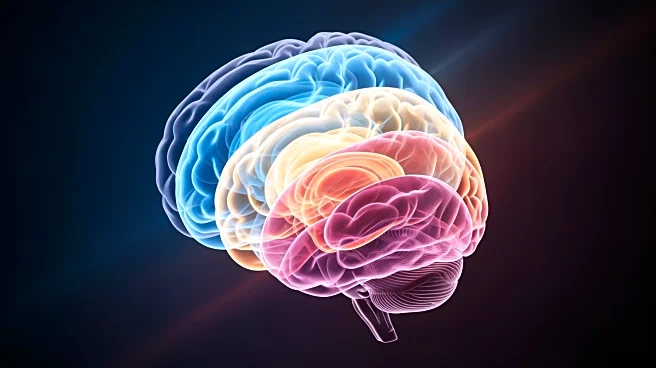
A recent study conducted by researchers at the University of Cambridge has identified five distinct phases in the lifespan of the human brain. The study, published in Nature Communications, utilized diffusion imaging brain scans from 4,216 individuals
ranging from infancy to 90 years of age. These phases are marked by significant changes in the brain's organization and elasticity, which refers to its ability to rewire itself by forming new synaptic connections. The study highlights four key turning points in brain development occurring at the ages of 9, 32, 66, and 83. Adolescence, defined in this study as the period from age 9 to 32, is noted as the most efficient time for synaptic formation, which is also when mental disorders are most likely to begin.
Why It's Important?
Understanding the phases of brain development is crucial for advancing mental health research and treatment. By identifying the periods when the brain is most elastic, researchers can better target interventions for mental disorders that typically emerge during adolescence. This study provides a framework for exploring how brain network properties such as integration, segregation, and centrality evolve over time, potentially leading to more effective therapies. The findings could influence educational strategies and mental health policies by emphasizing the importance of early intervention during adolescence, a critical period for cognitive and emotional development.