





What's Happening?
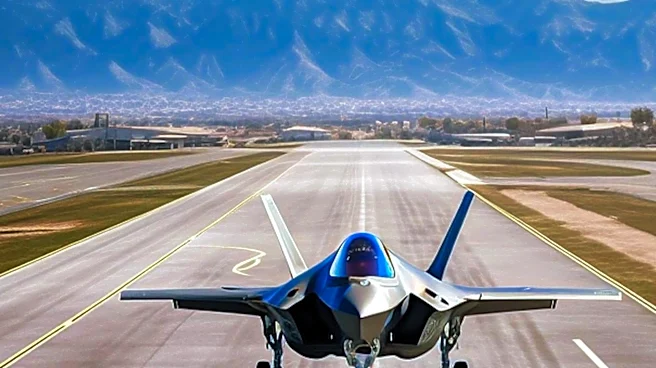
In January 1975, Major David W. Peterson, a pilot from the F-15 Joint Test Force at Edwards Air Force Base, participated in a series of record-setting flights aboard the F-15A 'Streak Eagle.' On January 16, 1975, Major Peterson set a world record by reaching
15,000 meters (approximately 49,212 feet) in 1 minute and 17.042 seconds. He further contributed to the record-breaking campaign on January 26, 1975, by reaching 25,000 meters (approximately 82,021 feet) in 2 minutes and 41.025 seconds. These achievements were part of a broader effort by the U.S. Air Force and McDonnell Douglas to demonstrate the F-15's superior performance, specifically its rapid climb capabilities, and to surpass existing Soviet records.
Why It's Important?
These record-setting flights by Major David W. Peterson and his colleagues were crucial for U.S. national security and aerospace industry. They publicly demonstrated the advanced capabilities of the F-15 fighter jet, which was a critical component of the U.S. Air Force's air superiority strategy during the Cold War. By breaking Soviet time-to-altitude records, the U.S. showcased its technological prowess and maintained a psychological edge in the arms race. This not only boosted national morale but also reinforced the F-15's reputation as a formidable aircraft, influencing international defense markets and military alliances. The success of these tests also validated the engineering and design efforts of McDonnell Douglas, solidifying its position as a leading defense contractor and contributing to the U.S. aerospace industry's global standing.
What's Next?
While these specific records have since been retired due to changes in sporting codes, the legacy of the 'Streak Eagle' flights continues to influence aerospace development. The data and experience gained from these extreme performance tests contributed to the ongoing refinement of fighter jet technology and operational tactics. Future advancements in military aviation will continue to build upon the foundational understanding of aerodynamics, propulsion, and pilot capabilities demonstrated by these early F-15 flights. The F-15 itself has undergone numerous upgrades and remains a key asset in the U.S. Air Force, with its design principles influencing subsequent generations of combat aircraft. The pursuit of speed and altitude records, though perhaps less publicized today, remains an underlying driver of innovation in military and civilian aviation.
Beyond the Headlines
The 'Streak Eagle' project, including Major Peterson's contributions, represents more than just technical achievements; it embodies the intense geopolitical rivalry of the Cold War. The competition to set aviation records was a proxy battleground for ideological and technological supremacy between the U.S. and the Soviet Union. These flights were not merely about speed or altitude but about projecting national power and deterring adversaries. The ethical dimension involves the immense resources dedicated to military superiority, raising questions about the balance between defense spending and other societal needs. Culturally, these feats of engineering and piloting captured the public imagination, symbolizing human ingenuity and the relentless pursuit of pushing boundaries, contributing to a narrative of American exceptionalism in technological innovation. The F-15 'Streak Eagle' now preserved at the National Museum of the United States Air Force serves as a tangible reminder of this era of intense competition and technological advancement.