
What's Happening?
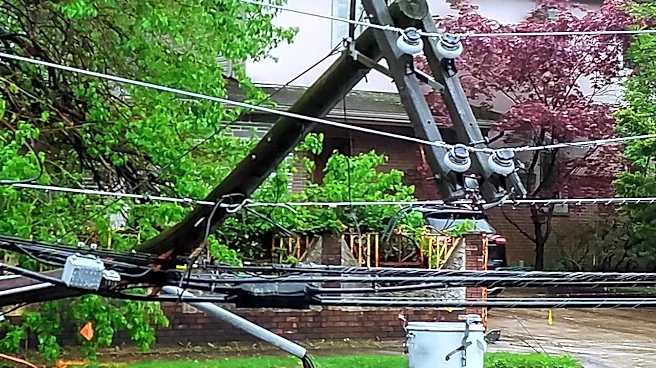
BC Hydro crews are working continuously to restore power across British Columbia following a storm that began Friday night. As of Sunday afternoon, over 160,000 customers have had their power restored,
but approximately 30,000 customers remain without electricity. Strong winds are causing new outages, complicating restoration efforts. Hardest-hit areas include Prince George, Port Hardy, and Courtenay. Due to extensive damage and difficult access in some regions, some customers are expected to be without power overnight. BC Hydro has entered an extended storm response phase, with crews addressing current outages, responding to new damage, and preparing for additional weather systems anticipated throughout the week. The utility is also advising customers to prepare for further potential outages.
Why It's Important?
This ongoing power crisis highlights the vulnerability of critical infrastructure to severe weather events, a growing concern for U.S. regions experiencing similar climate impacts. For affected communities, prolonged power outages disrupt daily life, impact businesses, and can pose safety risks, especially for vulnerable populations. The need for robust and resilient power grids capable of withstanding increasingly frequent and intense storms is paramount. The challenges faced by BC Hydro, such as fallen trees and difficult access, are common across North America during severe weather, underscoring the importance of proactive infrastructure maintenance and emergency preparedness. The economic impact of such widespread outages can be substantial, affecting local commerce and productivity.
What's Next?
BC Hydro crews will continue their round-the-clock efforts to restore power, prioritizing safety and efficiency. With additional weather systems expected, the utility will likely maintain its extended storm response, deploying resources strategically to address new outages as they arise. Customers are advised to have 72-hour emergency kits ready and to utilize the BC Hydro mobile app for outage information. In the longer term, this event may prompt further discussions and investments in grid hardening measures, such as undergrounding power lines or enhancing vegetation management, to mitigate the impact of future storms. Public awareness campaigns on storm preparedness are also likely to continue.
Beyond the Headlines
Beyond the immediate restoration efforts, this situation underscores broader issues related to climate change and infrastructure resilience. As extreme weather events become more common, utilities across North America face increasing pressure to adapt their infrastructure and operational strategies. This includes not only physical upgrades but also advancements in predictive modeling and emergency response coordination. The reliance on electricity for nearly all aspects of modern life means that power outages have cascading effects, impacting communication, transportation, and essential services. This event serves as a reminder of the critical need for continuous investment in and modernization of utility infrastructure to ensure reliable service in the face of evolving environmental challenges.