

What's Happening?
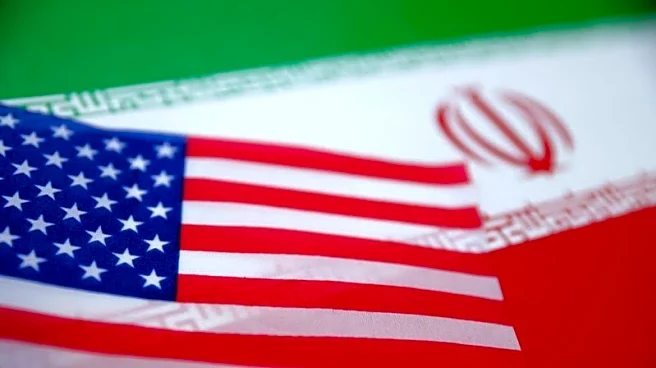
Iran's President Masoud Pezeshkian has instructed the country's foreign minister to pursue 'fair and equitable negotiations' with the United States. This development comes amid heightened tensions following a U.S. Navy fighter jet shooting down an Iranian
drone that approached an American aircraft carrier. Additionally, Iranian paramilitary forces attempted to intercept a U.S.-flagged ship in the Strait of Hormuz. Despite these incidents, the U.S. is planning to hold talks with Iranian officials in Turkey, with U.S. special envoy Steve Witkoff leading the discussions. The negotiations mark a significant shift for President Pezeshkian, who has received backing from Iran's Supreme Leader Ayatollah Ali Khamenei, indicating a potential thaw in relations.
Why It's Important?
The potential negotiations between Iran and the U.S. could have significant implications for international diplomacy and regional stability. The talks are particularly crucial given the backdrop of Iran's nuclear program and the recent military confrontations. Successful negotiations could lead to de-escalation in the Persian Gulf, impacting global oil markets and reducing the risk of military conflict. However, the inclusion of Iran's nuclear program in the discussions adds complexity, as the U.S. demands include halting uranium enrichment and limiting missile development. The outcome of these talks could influence U.S. foreign policy and its relations with Middle Eastern allies, particularly Israel, which has expressed skepticism about Iran's intentions.
What's Next?
The next steps involve the planned negotiations in Turkey, with participation from regional powers like Oman, Qatar, and Saudi Arabia. The success of these talks depends on both parties' willingness to compromise, particularly on contentious issues like Iran's nuclear ambitions. The U.S. will likely continue to monitor Iran's military activities closely, especially in strategic areas like the Strait of Hormuz. The international community will be watching for any agreements that could lead to a reduction in sanctions against Iran, potentially revitalizing its economy and altering regional power dynamics.
Beyond the Headlines
The negotiations could have deeper implications for Iran's domestic politics, as President Pezeshkian's move towards diplomacy may face resistance from hard-liners within the country. The talks also highlight the role of regional intermediaries like Turkey, which is positioning itself as a key diplomatic player. Additionally, the discussions could set a precedent for future U.S. engagement with other nations under similar circumstances, potentially reshaping global diplomatic strategies.