







What's Happening?
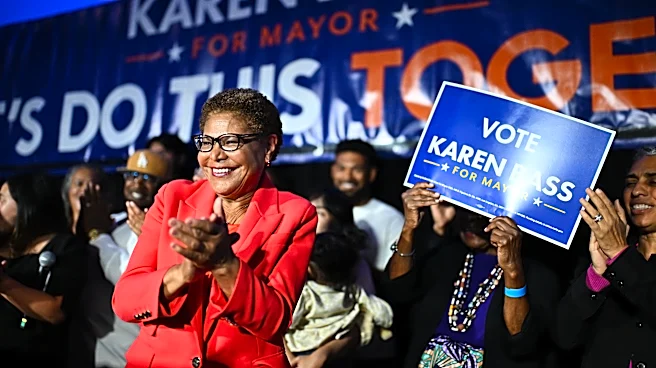
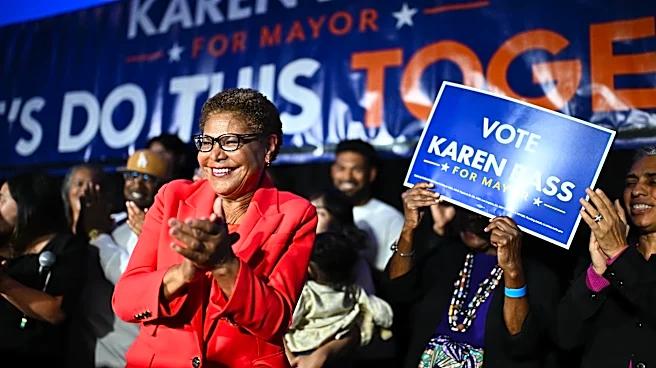
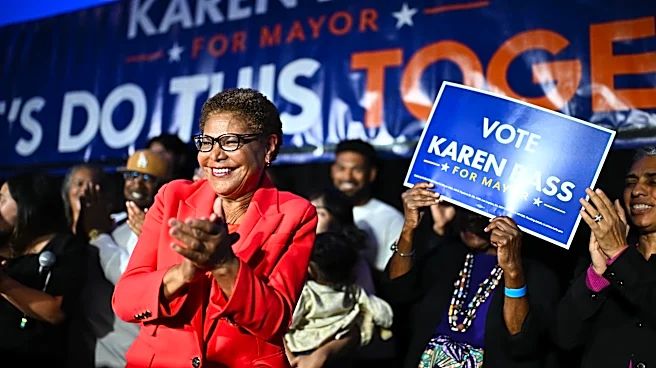
In the Los Angeles mayoral primary, voters expressed a strong desire for change, with incumbent Mayor Karen Bass facing significant challenges from both ends of the political spectrum. Despite leading the race, Bass's support was underwhelming, with many
voters opting for Republican reality TV star Spencer Pratt and democratic socialist City Councilmember Nithya Raman. Raman, who initially endorsed Bass, launched a last-minute campaign but failed to present a distinct platform, finishing third. The results reflect a broader anti-establishment sentiment among Angelenos, who are seeking new leadership and policies.
Why It's Important?
The primary results highlight a growing dissatisfaction with the political status quo in Los Angeles, as voters seek alternatives to traditional Democratic leadership. This shift could have significant implications for the city's governance and policy direction, particularly on issues like housing, public safety, and economic development. The emergence of candidates from diverse political backgrounds suggests a more fragmented political landscape, where coalition-building and cross-party collaboration may become increasingly important. The results also underscore the need for candidates to address the concerns of a diverse electorate, including younger and more progressive voters.
What's Next?
As the mayoral race moves towards a runoff, candidates will need to refine their platforms and engage with a broader range of voters. The outcome could influence future city policies and set the tone for upcoming elections. Candidates may focus on building coalitions and addressing key issues like homelessness and economic inequality. The political dynamics in Los Angeles could also serve as a bellwether for broader trends in urban governance and voter behavior across the U.S.