


What's Happening?
The United States Department of Agriculture (USDA) has announced a $700 million pilot program aimed at promoting regenerative agriculture practices. This initiative is designed to help farmers adopt methods that improve soil health, enhance water quality,
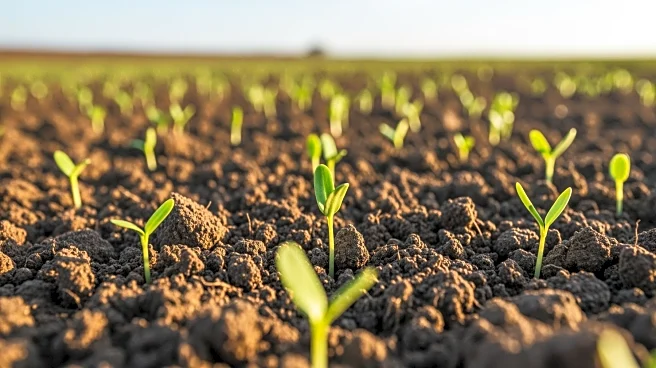
and strengthen the food and fiber supply. Cynthia Daley, Director and Founder of Chico State's Center for Regenerative Agriculture and Resilient Systems, emphasized the importance of regenerative agriculture, which includes techniques like cover cropping, crop rotation, biodiversity enhancement, composting, and livestock integration. These practices are intended to restore soil vitality, improve water retention, and promote ecological balance. The program is seen as a bipartisan effort to address climate change and environmental degradation while supporting the economic viability of farms.
Why It's Important?
This pilot program is significant as it represents a shift towards more sustainable agricultural practices in the U.S. By focusing on regenerative agriculture, the USDA aims to rebuild degraded soils, which is crucial for long-term food security and environmental health. The initiative also highlights the economic aspect, as it seeks to make farms more resilient and economically viable. With less than 2% of the U.S. population involved in production agriculture, this program could have a substantial impact on rural economies by providing farmers with the tools and financial support needed to transition to sustainable practices. The program's success could lead to broader adoption of regenerative methods, contributing to a more sustainable and resilient agricultural sector.
What's Next?
Farmers and ranchers interested in participating in the program are encouraged to apply through their local NRCS Service Center before their state’s ranking deadlines for FY2026 funding. Applications for the Environmental Quality Incentives Program (EQIP) and the Conservation Stewardship Program (CSP) can now be submitted using a new single regenerative application process. This streamlined approach aims to facilitate the adoption of regenerative practices across the country. As the program progresses, it is expected to catalyze further investment in sustainable agriculture, potentially influencing policy and funding decisions at both state and federal levels.