








What's Happening?
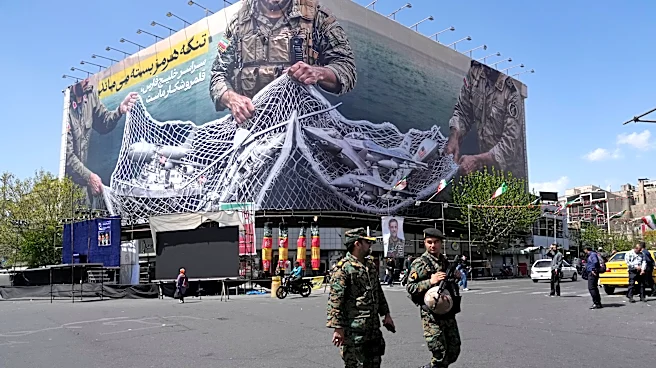
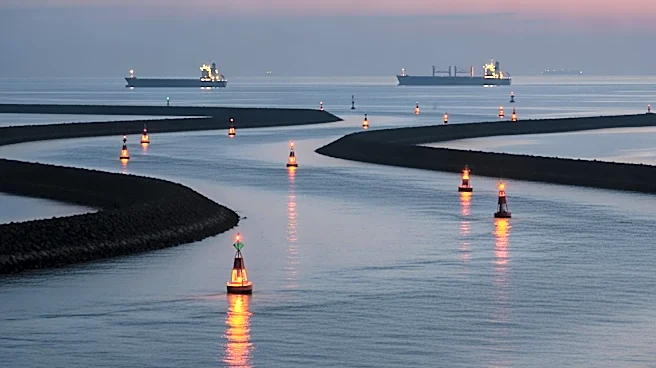
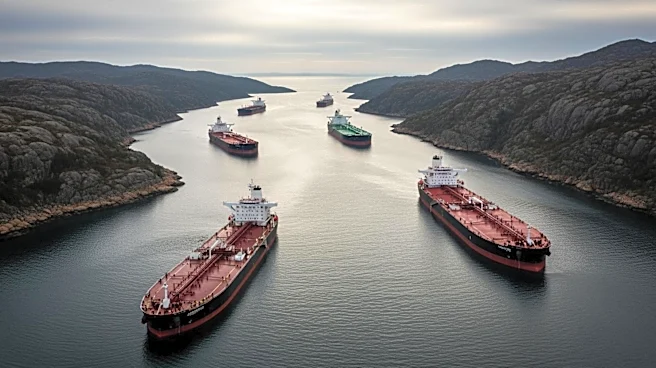
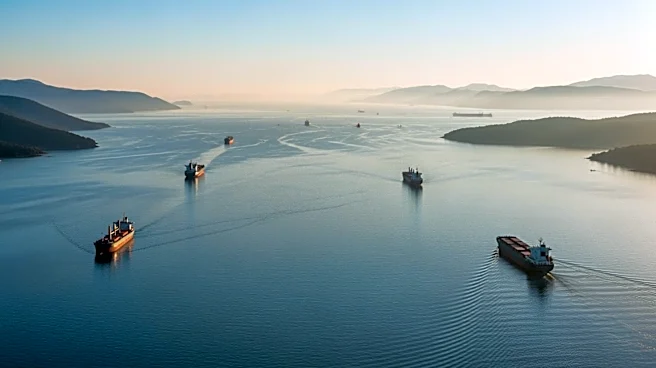
Shipping traffic through the Strait of Hormuz remains significantly below normal levels despite a ceasefire between the U.S. and Iran. Iran's Islamic Revolutionary Guard Corps (IRGC) has instructed vessels to navigate through Iranian waters around Larak
Island to avoid naval mines. The IRGC's directive has led to confusion among shipping firms, including Mitsui O.S.K. Lines, as they assess the impact of the ceasefire. Ship-tracking data shows only a fraction of the usual number of ships passing through the strait, with some vessels taking alternative routes. Iran has suggested imposing tolls for passage, a move opposed by Western leaders. The situation has contributed to rising oil prices, with global supply disruptions affecting markets.
Why It's Important?
The Strait of Hormuz is a critical chokepoint for global oil transportation, and disruptions in shipping traffic can have significant economic implications. The reduced traffic and potential tolls could increase shipping costs and exacerbate global energy supply challenges. The situation highlights the geopolitical tensions in the region, with Iran asserting control over the strait and impacting international trade routes. The ongoing uncertainty may lead to increased volatility in oil markets, affecting prices and economic stability worldwide. The ceasefire provides a temporary reprieve, but long-term solutions are needed to ensure safe passage and stability in the region.
What's Next?
Shipping companies and governments are likely to continue monitoring the situation closely, seeking clarity on navigation routes and potential tolls. Diplomatic efforts may be necessary to address Iran's control over the strait and ensure free passage for international vessels. The ceasefire's expiration could lead to renewed tensions, impacting shipping and oil markets further. Stakeholders may explore alternative routes or increase security measures to mitigate risks associated with transiting the Strait of Hormuz.