






What's Happening?
The European Union has announced a pause on national social media bans for children, blocking draft rules proposed by Austria and postponing similar national initiatives for 12 months. The EU's decision stems from its desire to prioritize the approval
of a unified, bloc-wide law, the 'EU Kids Act,' which was proposed last month. This act aims to ban children under 13 from social media and allow only limited, supervised access until age 15. The European Commission believes that allowing individual countries to proceed with national laws would fragment the bloc with varying age limits and could deter member states from swiftly adopting the overarching EU legislation. Austria, which sought to ban children under 14 from social media, expressed strong disapproval of the EU's decision, with Vice Chancellor Andreas Babler stating he could not 'fathom' the postponement of measures intended to protect children.
Why It's Important?
This move by the EU signifies a strategic effort to establish a harmonized approach to online child safety across its member states, rather than a patchwork of national regulations. For U.S. tech companies operating globally, this means that future compliance efforts will likely be directed towards a single, comprehensive EU standard rather than navigating multiple country-specific laws. The EU's emphasis on a unified approach could influence international discussions on digital regulation, potentially encouraging other regions, including the U.S., to consider broader, more consistent frameworks for protecting minors online. The delay in national bans, while frustrating for some member states, reflects a commitment to a more cohesive digital single market and a more predictable regulatory environment for platforms.
What's Next?
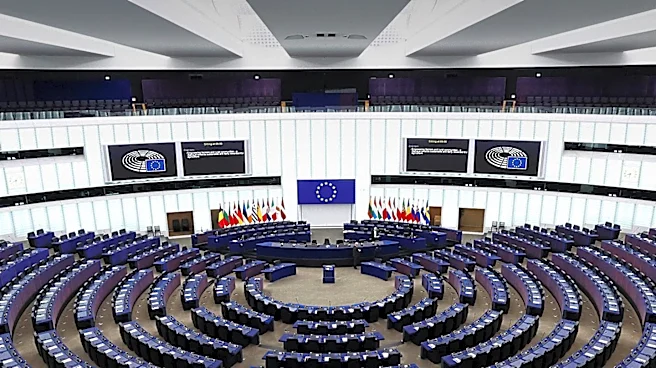
The European Commission hopes to reach a deal on the new 'EU Kids Act' with EU countries and the European Parliament in the coming months. During the 12-month postponement, member states will be expected to align their legislative efforts with the proposed bloc-wide rules. While some exceptions may apply, such as for France and Greece whose proposals were notified or drafted earlier, the general trend will be towards a unified EU standard. The outcome of these negotiations will determine the specific age limits and access restrictions for social media across the EU, impacting how platforms design their services and verify user ages for millions of European children.
Beyond the Headlines
The EU's decision highlights the inherent tension between national sovereignty and the desire for regulatory harmonization within a large economic bloc. While the goal is to create a more effective and consistent framework for child protection, it also demonstrates the challenges of coordinating diverse national interests and legislative timelines. The debate over social media access for minors touches upon fundamental questions of parental control, children's rights to information and expression, and the responsibilities of tech companies. The EU's pursuit of a unified law could serve as a model for other international bodies grappling with similar issues, potentially shaping the future of global digital governance and the balance between regulation and innovation in the tech sector.