
What's Happening?
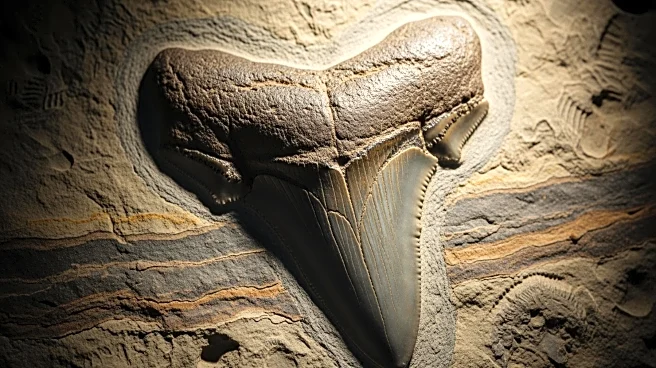
Researchers in Lima have unveiled a nearly complete fossil of Cosmopolitodus hastalis, an ancestor of the great white shark, from the Pisco Basin in Peru. This fossil, dating back approximately 9 million years, includes a large jaw and preserved stomach
contents, offering rare insights into the evolutionary history of sharks. The discovery is significant because complete shark fossils are uncommon due to the poor preservation of cartilage compared to bone. The fossil's teeth show characteristics of both white sharks and broad-toothed makos, suggesting a transitional form in shark evolution. This find adds to previous discoveries in Peru that have contributed to the debate over the lineage of modern great white sharks.
Why It's Important?
The discovery of the Cosmopolitodus hastalis fossil is crucial for understanding the evolutionary path of great white sharks. Shark evolution is difficult to trace due to the scarcity of complete fossils, making this find particularly valuable. The fossil provides evidence supporting the theory that modern great whites may have evolved from broad-toothed mako sharks rather than the giant Carcharodon megalodon. This has implications for paleontology, as it challenges long-held beliefs about shark ancestry and highlights the importance of Peru's fossil record in resolving these debates. The findings could influence future research directions and conservation strategies for modern shark species.