






What's Happening?
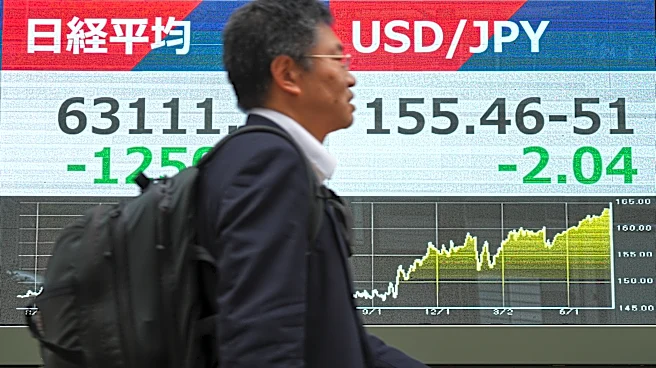
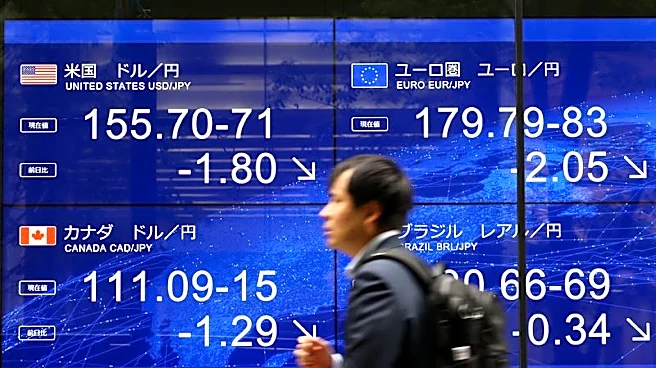
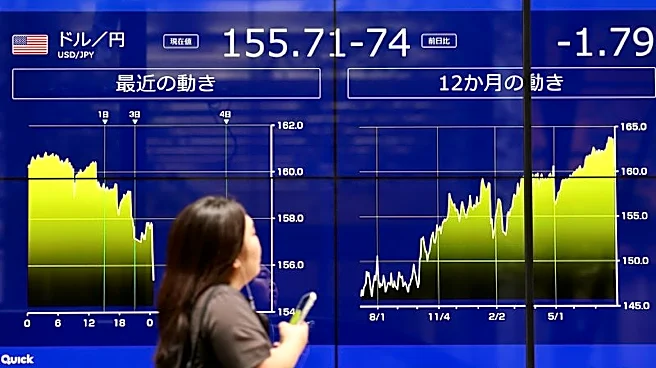
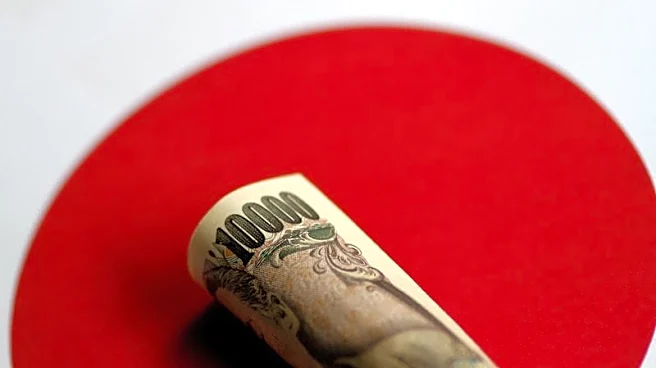
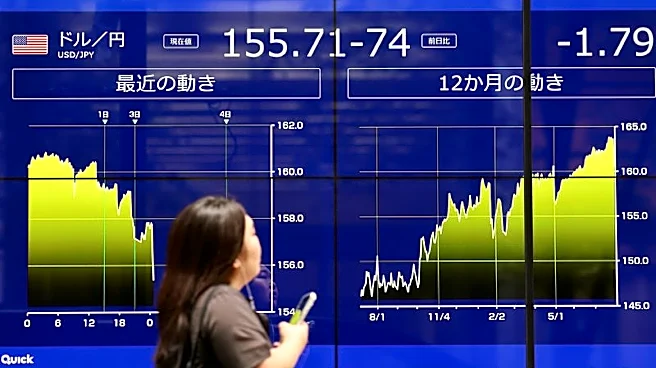
Global shares saw an uptick on Tuesday, following a rally on Wall Street driven by easing oil prices. The market movements come in the wake of a joint U.S.-Japan currency intervention aimed at stabilizing the yen, which had fallen to nearly 40-year lows.
European markets, including France's CAC 40 and Germany's DAX, showed gains, while U.S. futures indicated a positive opening. In Asia, Japan's Nikkei 225 also rose, reflecting the impact of the currency intervention. Analysts are debating the long-term effectiveness of such interventions, as they do not address underlying economic issues like inflation and interest rates.
Why It's Important?
The joint currency intervention by the U.S. and Japan is a significant move in international finance, highlighting the importance of stable currency exchange rates for global economic stability. The intervention aims to curb speculative attacks on the yen, which could have broader implications for international trade and investment. A stable yen is crucial for Japan's export-driven economy and can influence global markets. The rally in global shares suggests investor confidence in the intervention's short-term success, but questions remain about its long-term impact on economic fundamentals.
What's Next?
The effectiveness of the currency intervention will be closely monitored by global financial markets. If successful, it could lead to further coordinated actions by major economies to stabilize currency markets. However, if the intervention fails to address underlying economic issues, such as inflation and interest rate disparities, further volatility could ensue. Investors and policymakers will be watching for any shifts in monetary policy that could signal a more permanent solution to currency instability.