
What's Happening?
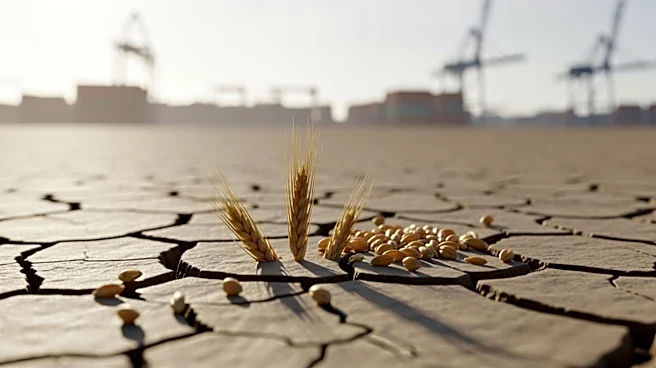
The Food and Agriculture Organization (FAO) reports that up to 40% of global crops are lost annually due to pests and diseases, posing significant threats to food security, trade, and livelihoods. The challenge
in addressing these losses lies in the fragmented and inconsistent data available, which complicates the production of robust global estimates. To combat this, data stewardship initiatives are being implemented to ensure data is well-organized, documented, and shared effectively. The 'Global Burden of Crop Loss' (GBCL) project and the 'Enabling FAIR data sharing and responsible data use' (EDA) project are two key efforts in this area. These projects aim to generate consistent, data-driven estimates of crop loss and improve data management and sharing practices. A project-specific data management and access plan (DMAP) has been developed to govern data handling, ensuring alignment with FAIR (findable, accessible, interoperable, and reusable) principles.
Why It's Important?
The initiatives to improve data stewardship in agriculture are crucial for enhancing decision-making processes related to crop loss. By providing more reliable and accessible data, these projects can help policymakers, researchers, and farmers make informed decisions to mitigate crop loss, ultimately supporting food security and economic stability. The implementation of FAIR principles ensures that data is not only available but also usable, which is essential for developing effective strategies to combat agricultural challenges. This approach can lead to better resource allocation, improved agricultural practices, and increased resilience against pests and diseases, benefiting both local and global agricultural communities.
What's Next?
As these data stewardship projects progress, they are expected to scale up and provide a model for embedding FAIR data principles into real-world agricultural programs. The continued collaboration between projects, teams, and disciplines will be essential in overcoming practical challenges, such as data licensing and publication. The success of these initiatives could lead to broader adoption of similar data management practices across other sectors, further enhancing the ability to address complex global challenges through improved data stewardship.