




What's Happening?
The Arizona Supreme Court has ruled against two significant ballot measures concerning the state's school voucher program. Proposition 212, also known as the Protect Education Act, which aimed to introduce sweeping regulations to Arizona's billion-dollar
universal school voucher program, will not appear on the ballot. The court upheld a lower court's decision that disqualified a sufficient number of voter signatures, placing it below the required threshold. Prop. 212 sought to add an income eligibility cap, establish penalties for voucher misuse, and mandate educational and safety requirements for schools accepting vouchers. Concurrently, Proposition 145, a Republican-led referral designed to prevent future regulations on the school voucher system, was also blocked from the November ballot. The court agreed with a lower court's July decision that Prop. 145 was unconstitutional, citing that its main provisions changed different parts of the Arizona Constitution and lacked sufficient connection, violating the state's separate amendment requirement. This ruling thwarts GOP efforts to preemptively protect the voucher program from future legislative or voter-backed challenges.
Why It's Important?
This dual ruling by the Arizona Supreme Court carries significant implications for the future of education policy and voter initiatives in the state. The blocking of Proposition 212 means that the current universal school voucher program, which has faced criticism for its lack of regulation and potential for misuse, will continue without the proposed oversight. This is a victory for proponents of school choice, including former Republican Governor Doug Ducey, who helped establish the program. Conversely, the invalidation of Proposition 145 prevents the legislature from enacting a measure that would have made it nearly impossible to reform the voucher system in the future, even through voter-backed initiatives. This maintains a degree of legislative and public accountability over the program, preventing it from being enshrined in the constitution with broad protections. The decisions highlight the ongoing tension between school choice advocates and public education proponents, and the critical role of the judiciary in interpreting constitutional limits on ballot measures and legislative power.
What's Next?
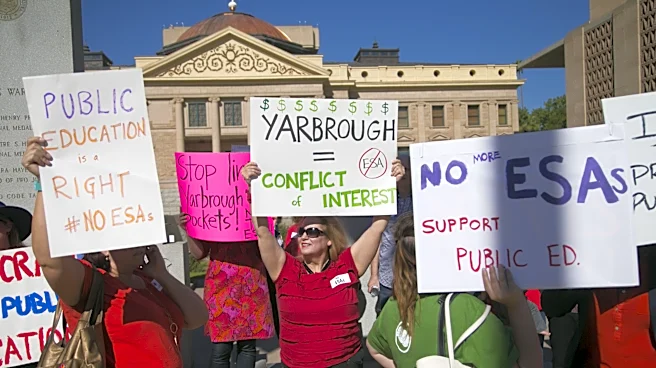
With Proposition 212 off the ballot, public education advocates and the Arizona Education Association (AEA) have indicated a shift in strategy. Instead of pursuing the ballot initiative, they plan to focus their efforts on supporting 'pro-education candidates' in the upcoming midterm election. Their goal is to elect lawmakers who will work to address concerns about the school voucher program through legislative means. Opponents of Prop. 212, including the Goldwater Institute and the Arizona Free Enterprise Club, are celebrating the court's decision as a 'major victory for school choice,' suggesting they will continue to defend the existing voucher system. The rulings also underscore the ongoing legal scrutiny of ballot measure processes, particularly regarding signature validity and constitutional requirements for proposed amendments. Future attempts to regulate or protect the voucher program will likely involve continued legislative debates and potentially new ballot initiatives, albeit with a clearer understanding of the legal boundaries established by these Supreme Court decisions.
Beyond the Headlines
The Arizona Supreme Court's decisions delve into deeper constitutional principles regarding ballot initiatives and legislative power. The ruling on Proposition 145, specifically concerning the 'separate amendment requirement,' reinforces the idea that ballot measures cannot bundle disparate constitutional changes into a single proposal. This principle is crucial for ensuring that voters can make informed decisions on specific issues without being forced to accept or reject an entire package of unrelated amendments. The court's emphasis on the logical relationship and impact of provisions within a ballot measure aims to prevent legislative overreach or attempts to circumvent public will through broadly worded initiatives. Furthermore, the debate surrounding the school voucher program itself touches upon fundamental questions of public funding for education, parental choice, and the role of private institutions in the educational landscape. The ongoing legal and political battles reflect a broader societal discussion about equitable access to quality education and the allocation of taxpayer dollars, with significant implications for the future of Arizona's educational system.