


What's Happening?
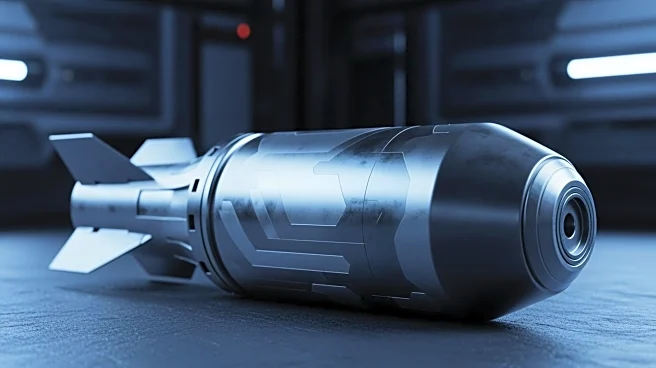
The Islamic Revolutionary Guard Corps (IRGC) Aerospace Force in Iran is reportedly advancing its development of unconventional warheads for ballistic missiles. This initiative is part of a broader strategy to enhance Iran's military capabilities amid
escalating regional tensions. Sources indicate that these activities have intensified recently, driven by concerns over potential confrontations with Israel and the United States. The IRGC is focusing on optimizing ballistic missiles to carry chemical and biological agents, alongside upgrading command-and-control systems. This development follows Iran's historical context as a victim of chemical warfare, notably during Saddam Hussein's attack on Sardasht. The Iranian leadership perceives the use of unconventional weapons as a potential deterrent against existential threats, despite the inherent contradictions given their past experiences with chemical attacks.
Why It's Important?
The acceleration of Iran's unconventional warhead development has significant implications for regional and global security. It raises the stakes in the Middle East, potentially prompting a military response from Israel or the United States, who view these developments as direct threats. The enhancement of Iran's missile capabilities could destabilize the region further, leading to an arms race or increased military engagements. For the U.S., this development could influence foreign policy decisions, military strategies, and diplomatic relations in the Middle East. It also poses a challenge to international non-proliferation efforts, as Iran's actions may encourage other nations to pursue similar capabilities.
What's Next?
The international community, particularly Western intelligence agencies, is likely to increase surveillance and monitoring of Iran's military activities. Diplomatic efforts may intensify to address the potential threat posed by Iran's missile program. The U.S. and its allies might consider imposing additional sanctions or engaging in diplomatic negotiations to curb Iran's military advancements. Meanwhile, Iran may continue to bolster its defenses and seek strategic alliances to counter perceived threats from Israel and the U.S. The situation remains fluid, with potential for either escalation or diplomatic resolution.