
What's Happening?
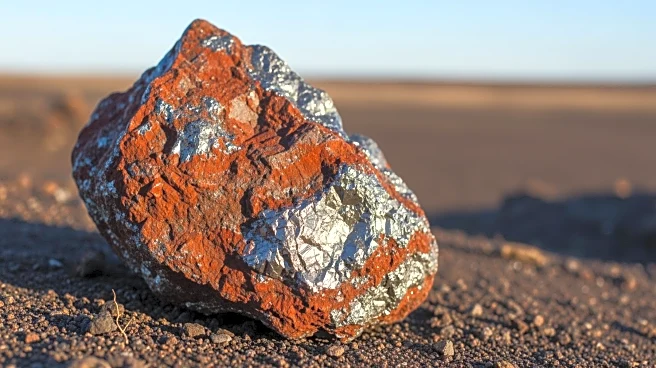
Geologists have uncovered the largest iron ore deposit ever recorded beneath the Australian outback, estimated to contain 55 billion metric tonnes of ore valued at $5.7 trillion. This discovery challenges
existing geological models of ore formation, suggesting a geodynamic process linked to tectonic activity rather than early atmospheric changes. The deposit, located in the Hamersley Basin, formed between 1.4 and 1.1 billion years ago, contrasting with previous estimates tied to the Great Oxidation Event. The findings could reshape mineral exploration strategies globally, offering new insights into the formation of high-grade ore deposits.
Why It's Important?
This discovery has significant implications for the global iron ore market, potentially enhancing Australia's position as a leading exporter. The scientific insights gained from this study could lead to more efficient exploration and extraction methods, benefiting the mining industry worldwide. By linking ore formation to tectonic processes, researchers can better predict the location of similar deposits, potentially unlocking new mineral resources in other regions. This could drive economic growth and technological advancements in mining, while also influencing global trade dynamics.
Beyond the Headlines
The discovery prompts a reevaluation of geological timelines and the interplay between tectonics and resource distribution. It highlights the importance of advanced dating techniques in understanding Earth's history and could lead to further research into the role of supercontinent cycles in mineral formation. The findings may also influence environmental and regulatory policies related to mining, as countries seek to balance resource extraction with ecological preservation.