






What's Happening?
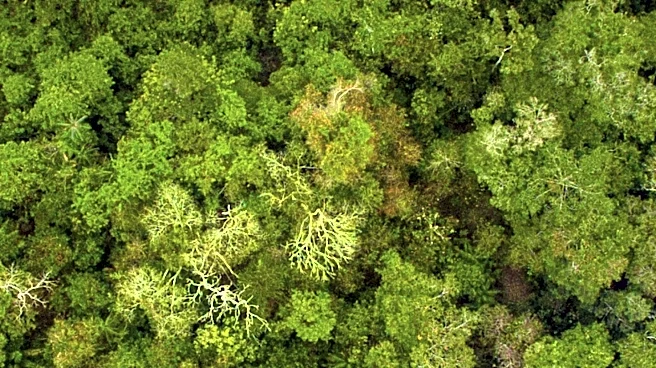
A new study published in Nature Communications has found that forests with a higher diversity of tree species are better equipped to withstand and recover from compound climate extremes, such as simultaneous drought and high temperatures. Researchers
analyzed data from 88,116 forest plots across the continental U.S. that had no record of human disturbance or fire. Using satellite data to measure 'greenness' (an indicator of photosynthesis), they assessed how forests responded to and recovered from climate events. The study confirmed that diverse forests exhibited greater resilience during these events and recovered more effectively afterward. While diversity offers a protective effect, the study also noted that its strength varies across different climate events and that other factors like rainfall, soil health, and daily temperatures also influence a forest's ability to handle climate stress.
Why It's Important?
This research provides crucial insights for forest managers in the U.S. as they develop adaptation strategies for a changing climate. With increasing frequency and intensity of extreme weather events, understanding how to build more resilient forests is paramount. The finding that species diversity acts as an 'insurance policy' against climate shocks suggests that promoting biodiversity should be a key component of forest management plans. This could involve planting a wider variety of tree species or protecting existing diverse stands. The study's focus on compound climate extremes, rather than single events, reflects the complex reality of global warming and offers a more comprehensive understanding of forest vulnerability. For policymakers, these findings underscore the importance of conservation efforts that prioritize ecological diversity to safeguard natural resources and mitigate the long-term impacts of climate change on U.S. ecosystems.
What's Next?
The study's authors suggest that forest managers should consider monitoring already diverse tree stands or trial planting new species together to observe their performance during future climate extremes. This practical application of the research could help translate broad scientific findings into localized management advice. Future research aims to explore how forests respond to repeated climate shocks and what factors contribute to their long-term capacity to absorb such events. This ongoing investigation will be critical for developing robust, region-specific strategies. The findings also imply a need for continued investment in forest inventory and monitoring programs, like the U.S. Forest Inventory and Analysis program, to gather the data necessary for informed decision-making in a rapidly changing environment.
Beyond the Headlines
The concept of biodiversity as a buffer against environmental stress has profound implications beyond forest management. It highlights the intrinsic value of ecological complexity and challenges monoculture approaches in agriculture and forestry. The study's findings suggest that a diverse ecosystem is inherently more stable and adaptable, offering a natural defense against unpredictable environmental shifts. This principle extends to broader ecological resilience, emphasizing that a variety of species, with their different traits and resource utilization strategies, can collectively withstand disturbances that might devastate a less diverse system. Ethically, it reinforces the argument for preserving natural habitats and preventing species loss, as each species contributes to the overall resilience of an ecosystem. Culturally, it encourages a deeper appreciation for the intricate web of life and the wisdom embedded in natural systems.