





What's Happening?
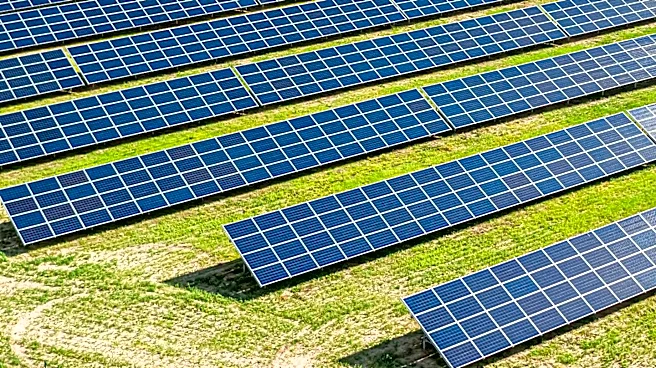
A farmer in Massachusetts has adopted an innovative approach known as agrivoltaics, which combines agriculture with solar energy generation. By installing 832 tracking solar panels over berry crops, the farm is able to produce both food and electricity
simultaneously. This dual-use system not only generates clean energy but also creates a microclimate that benefits the crops. The elevated solar panels, which track the sun, provide shade that reduces soil temperatures and retains moisture, leading to healthier and more productive crops. The project demonstrates how agrivoltaics can enhance farm income while contributing to renewable energy goals.
Why It's Important?
The Massachusetts agrivoltaics project is significant as it offers a sustainable solution to the challenges posed by climate change and energy demands. By integrating solar panels with agriculture, farms can reduce their reliance on fossil fuels, lower electricity costs, and mitigate the effects of extreme weather conditions. This approach also highlights the potential for agrivoltaics to make farms more climate-resilient, particularly in regions facing frequent droughts. The success of this project could encourage more farmers to adopt similar practices, promoting a shift towards more sustainable and efficient agricultural methods.
Beyond the Headlines
The implementation of agrivoltaics raises important considerations about the balance between energy production and agricultural needs. While the shade provided by solar panels can protect crops from excessive heat, it is crucial to ensure that plants receive adequate sunlight for photosynthesis. The Massachusetts project has shown promising results, with crops under the panels being larger and sweeter. However, ongoing research is needed to optimize the balance between shade and sunlight to maximize both crop yield and energy production. This development also underscores the potential for agrivoltaics to contribute to food security and energy independence.