



What's Happening?
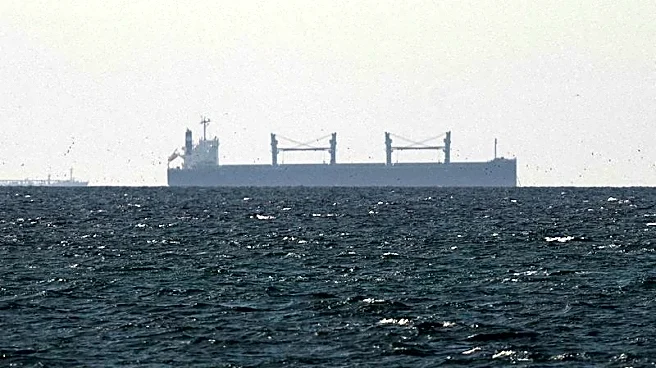
The United Nations Security Council is set to vote on a proposal aimed at securing the Strait of Hormuz, a critical waterway for global oil transit. The resolution, initially proposed by Bahrain, has been significantly modified due to opposition from
China, Russia, and France. The final draft authorizes only defensive actions to ensure safe passage of vessels, omitting any reference to offensive military measures. This change comes after Iran's control over the strait has led to increased global energy prices. The vote, originally scheduled for Friday, has been postponed to Saturday to allow further diplomatic negotiations. The resolution's passage remains uncertain due to the veto power held by the opposing countries.
Why It's Important?
The Strait of Hormuz is a vital channel through which one-fifth of the world's oil supply passes. Iran's control over this waterway has significant implications for global energy markets, contributing to rising oil prices. The resolution's outcome could impact international relations and economic stability, particularly for countries reliant on oil imports. The opposition from China, Russia, and France highlights geopolitical tensions and differing international priorities. The resolution's focus on defensive measures reflects a cautious approach to avoid further escalation in the region, which could have broader implications for global peace and security.
What's Next?
The upcoming vote will be closely monitored, as the resolution's passage depends on overcoming the vetoes from China, Russia, and France. Diplomatic efforts are likely to continue in an attempt to reach a consensus. If the resolution passes, it could lead to increased international naval presence in the region to ensure safe passage through the strait. However, if it fails, tensions in the region may persist, potentially leading to further disruptions in global oil supply and economic instability. The situation underscores the need for diplomatic solutions to address the underlying conflicts in the region.