




What's Happening?
The Ecuadorian justice system has ordered the ecological restoration of El Murciélago Beach in Manta, Ecuador, and indefinitely suspended the 'Patio 600' port expansion project. Judge Ingrid Elizabeth Mera Tomalá of the Manta Criminal Judicial Unit ruled
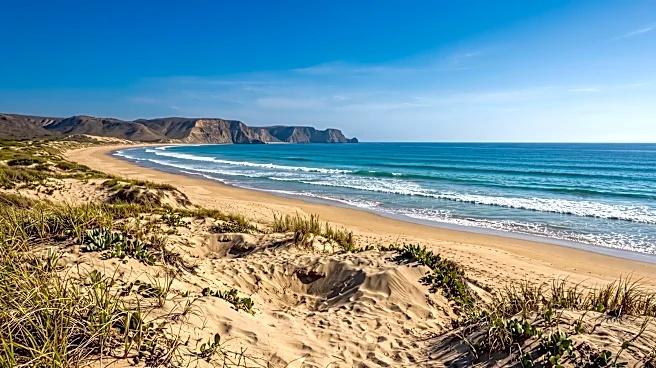
that the construction violated nature rights. The decision partially granted a constitutional protection petition filed by the Citizens’ Commission for the Defense of the Beach. The Manta Port Terminal (TPM) and the Manta Port Authority (APM) are held responsible for environmental impacts. The 'Patio 600' expansion, a public-private partnership with an announced investment of $2.3 million, involved developing three hectares of the beach. Initial construction activities reportedly removed approximately 4,000 cubic meters of sand, damaging owl nests, migratory marine bird resting grounds, and sea turtle nesting sites. The area is designated as a Conservation and Sustainable Use Area (ACUS).
Why It's Important?
This ruling underscores the growing global recognition and legal enforcement of nature rights, a concept enshrined in Ecuador's constitution. It sets a precedent for environmental protection against large-scale infrastructure projects, potentially influencing similar legal challenges in other countries with progressive environmental laws. For the port and maritime industries, this decision highlights the increasing scrutiny of environmental impact assessments and the need for sustainable development practices. It also empowers local civic groups and environmental advocates, demonstrating that legal action can successfully halt projects deemed environmentally destructive. The economic implications for the Manta Port Terminal and Authority include potential financial losses from the suspended project and the costs associated with ecological restoration, shifting investment priorities towards environmentally compliant initiatives.
What's Next?
The Manta Port Terminal (TPM) is mandated to fund the ecological restoration of the affected area, which will be carried out by accredited professionals under the supervision of relevant authorities. The Manta Port Authority (APM) is tasked with ensuring compliance with the prohibition against continuing the construction work. This legal victory for the Citizens’ Commission for the Defense of El Murciélago Beach is expected to encourage similar environmental protection efforts in Ecuador and potentially inspire other communities globally to challenge development projects that threaten natural ecosystems. The long-term implications for the port's expansion plans remain uncertain, as any future development will likely require more stringent environmental safeguards and community engagement.
Beyond the Headlines
This case reflects a broader global trend where environmental concerns are increasingly being integrated into legal frameworks and judicial decisions. The concept of 'nature rights' challenges traditional anthropocentric views of development, advocating for the intrinsic value and legal standing of ecosystems. This ruling could lead to a re-evaluation of environmental regulations and corporate social responsibility in development projects, particularly in biodiversity-rich regions. It also highlights the power of grassroots movements in influencing legal outcomes and shaping public policy. The ethical dimension of balancing economic development with ecological preservation is at the forefront, suggesting a potential shift towards more sustainable and equitable development models that prioritize long-term environmental health over short-term economic gains.