




What's Happening?
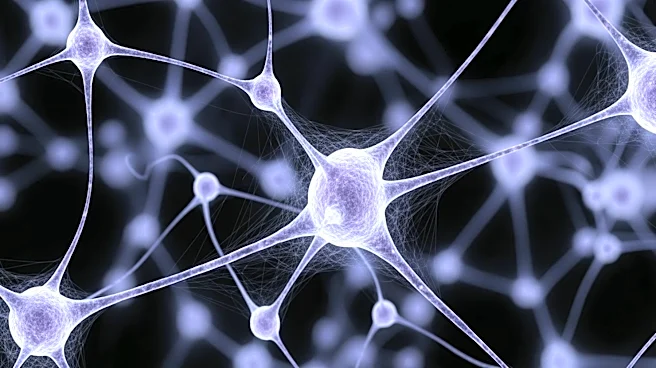
Recent research has uncovered a significant role for astrocytes, a type of brain cell, in the formation and control of fear memories, which could have implications for treating post-traumatic stress disorder (PTSD). Traditionally seen as support cells
for neurons, astrocytes are now recognized for their active involvement in fear memory processing. The study, conducted by a team from the University of Arizona and the National Institutes of Health, focused on the amygdala, a brain region crucial for fear processing. Researchers found that astrocytes not only help encode and maintain fear memories but also influence how these memories are expressed or extinguished. This discovery challenges the neuron-centric view of fear processing and suggests that targeting astrocytes could offer new therapeutic avenues for PTSD and anxiety disorders.
Why It's Important?
The findings from this study could revolutionize the approach to treating PTSD and anxiety disorders by shifting the focus from neurons to astrocytes. Understanding the role of astrocytes in fear memory processing opens up potential for developing treatments that specifically target these cells, potentially improving outcomes for individuals suffering from persistent fear-related conditions. This research highlights the complexity of brain networks involved in fear and suggests that a broader understanding of these networks could lead to more effective interventions. The implications extend beyond PTSD, potentially affecting how other anxiety-related disorders are treated, thereby impacting a significant portion of the population dealing with these mental health challenges.
What's Next?
The research team plans to expand their investigation to understand the role of astrocytes in other brain regions involved in fear processing, such as the prefrontal cortex and the periaqueductal gray. These areas are associated with decision-making and defensive responses, respectively. By mapping the broader fear circuitry, scientists hope to gain insights into why certain individuals exhibit inappropriate fear responses. This could lead to more targeted therapies that address the specific brain circuits involved in fear and anxiety disorders. Future studies may also explore how altering astrocyte activity can modulate fear responses, potentially leading to new pharmacological treatments.